> ## Documentation Index
> Fetch the complete documentation index at: https://www.conductor.com/docs/llms.txt
> Use this file to discover all available pages before exploring further.
# Authentication
> Learn how to authenticate securely with Conductor's API.
## Authenticate with a Conductor API token
Connections to Conductor's API can be authenticated using a Bearer token.
### Generate your Conductor API token
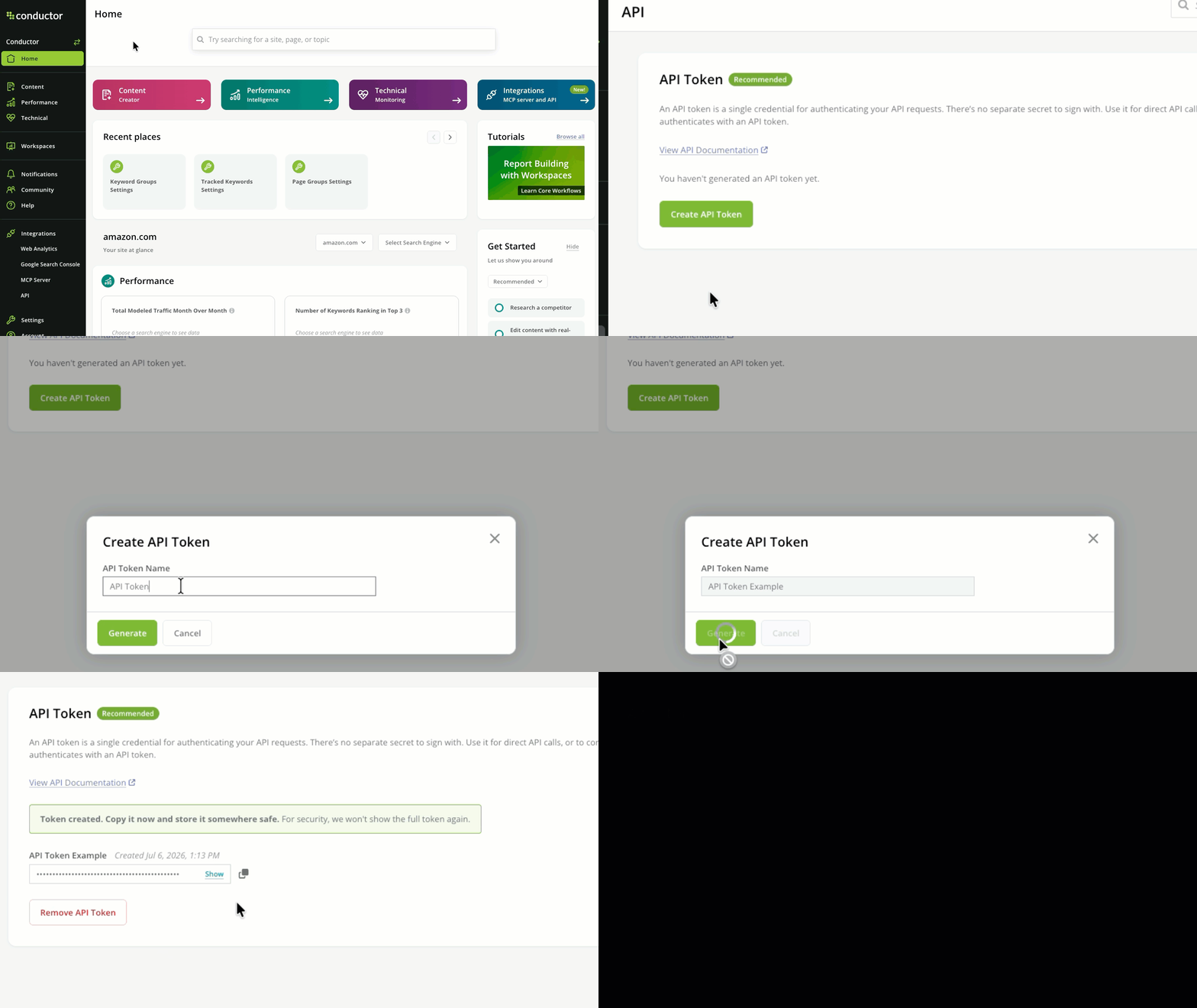
To generate or copy your Conductor API token:
1. In Conductor, follow the path **Integrations** > **API**.
2. In the **API Token** section, click **Create API Token**.
3. In the form that appears, give your token a name and click **Generate**.
4. Copy the generated token. Its full string won't be shown again.
 Not a Conductor user yourself? Have a Conductor admin user add you to the platform to generate a token for yourself.
### Sending your request
When configuring your requests, pass the API token you generated above. Review some common examples across different languages you might use.
#### Examples
```bash cURL theme={null}
curl -X POST "https://api.conductor.com/YOUR_REQUEST_PATH" \
-H "Authorization: Bearer YOUR_CONDUCTOR_API_TOKEN" \
-H "Content-Type: application/json" \
-d '{"key": "value"}'
```
```python Python theme={null}
import requests
response = requests.post(
"https://api.conductor.com/YOUR_REQUEST_PATH",
headers={
"Authorization": "Bearer YOUR_CONDUCTOR_API_TOKEN",
"Content-Type": "application/json",
},
json={"key": "value"},
)
response.raise_for_status()
data = response.json()
```
```javascript Node.js theme={null}
const response = await fetch("https://api.conductor.com/YOUR_REQUEST_PATH", {
method: "POST",
headers: {
Authorization: "Bearer YOUR_CONDUCTOR_API_TOKEN",
"Content-Type": "application/json",
},
body: JSON.stringify({ key: "value" }),
});
if (!response.ok) throw new Error(`HTTP ${response.status}`);
const data = await response.json();
```
```ruby Ruby theme={null}
require "net/http"
require "uri"
require "json"
uri = URI("https://api.conductor.com/YOUR_REQUEST_PATH")
http = Net::HTTP.new(uri.host, uri.port)
http.use_ssl = true
request = Net::HTTP::Post.new(uri)
request["Authorization"] = "Bearer YOUR_CONDUCTOR_API_TOKEN"
request["Content-Type"] = "application/json"
request.body = { key: "value" }.to_json
response = http.request(request)
data = JSON.parse(response.body)
```
```java Java theme={null}
import java.net.URI;
import java.net.http.HttpClient;
import java.net.http.HttpRequest;
import java.net.http.HttpResponse;
HttpClient client = HttpClient.newHttpClient();
HttpRequest request = HttpRequest.newBuilder()
.uri(URI.create("https://api.conductor.com/YOUR_REQUEST_PATH"))
.header("Authorization", "Bearer YOUR_CONDUCTOR_API_TOKEN")
.header("Content-Type", "application/json")
.POST(HttpRequest.BodyPublishers.ofString("{\"key\": \"value\"}"))
.build();
HttpResponse response =
client.send(request, HttpResponse.BodyHandlers.ofString());
```
```go Go theme={null}
package main
import (
"io"
"net/http"
"strings"
)
func main() {
body := strings.NewReader(`{"key": "value"}`)
req, _ := http.NewRequest("POST", "https://api.conductor.com/YOUR_REQUEST_PATH", body)
req.Header.Set("Authorization", "Bearer YOUR_CONDUCTOR_API_TOKEN")
req.Header.Set("Content-Type", "application/json")
resp, err := http.DefaultClient.Do(req)
if err != nil {
panic(err)
}
defer resp.Body.Close()
respBody, _ := io.ReadAll(resp.Body)
_ = respBody
}
```
```php PHP theme={null}
true,
CURLOPT_POST => true,
CURLOPT_POSTFIELDS => json_encode(["key" => "value"]),
CURLOPT_HTTPHEADER => [
"Authorization: Bearer YOUR_CONDUCTOR_API_TOKEN",
"Content-Type: application/json",
],
]);
$response = curl_exec($ch);
curl_close($ch);
$data = json_decode($response, true);
```
## Support for legacy connections
Conductor still supports existing connections to Conductor's API using this legacy method. However, we recommend new connections use the API token method described above: it's simpler—one credential, no separate secret, and no signature to compute or keep in sync with a clock.
Conductor's API also supports secure authentication using a combination of an API key and a request signature to ensure your data stays secure.
### Required credentials
Each endpoint requires that you pass **both** of the following elements together:
* **API Key (Query Parameter):** `apiKey=`
* **Request Signature (Query Parameter):** `sig=`
### Computing the signature
The signature is an MD5 hash computed using your API key, your secret, and a Unix timestamp.
#### Code Examples
```python generateSig.py theme={null}
import hashlib
import time
def compute_signature(api_key: str, secret: str) -> str:
timestamp = str(int(time.time()))
string_to_sign = f"{api_key}{secret}{timestamp}"
return hashlib.md5(string_to_sign.encode('utf-8')).hexdigest()
api_key = "your-api-key"
secret = "your-secret"
signature = compute_signature(api_key, secret)
url = f"https://api.conductor.com/v4/accounts/123/drafts?apiKey={api_key}&sig={signature}"
```
```java generateSig.java theme={null}
import java.security.NoSuchAlgorithmException;
import java.security.MessageDigest;
import java.math.BigInteger;
String generateSignature(final String apiKey, final String sharedSecret)
throws NoSuchAlgorithmException {
final long curTimeEpochSeconds = Math.round(System.currentTimeMillis() / 1000.0);
final String stringToHash = apiKey + sharedSecret + curTimeEpochSeconds;
final MessageDigest md = MessageDigest.getInstance("MD5");
final byte[] digestBytes = md.digest(stringToHash.getBytes());
final StringBuffer sb = new StringBuffer();
for (int i = 0; i < digestBytes.length; i++) {
sb.append(Integer.toString((digestBytes[i] & 0xff) + 0x100, 16).substring(1));
}
final String hexEncoded = sb.toString();
return hexEncoded;
}
```
Not a Conductor user yourself? Have a Conductor admin user add you to the platform to generate a token for yourself.
### Sending your request
When configuring your requests, pass the API token you generated above. Review some common examples across different languages you might use.
#### Examples
```bash cURL theme={null}
curl -X POST "https://api.conductor.com/YOUR_REQUEST_PATH" \
-H "Authorization: Bearer YOUR_CONDUCTOR_API_TOKEN" \
-H "Content-Type: application/json" \
-d '{"key": "value"}'
```
```python Python theme={null}
import requests
response = requests.post(
"https://api.conductor.com/YOUR_REQUEST_PATH",
headers={
"Authorization": "Bearer YOUR_CONDUCTOR_API_TOKEN",
"Content-Type": "application/json",
},
json={"key": "value"},
)
response.raise_for_status()
data = response.json()
```
```javascript Node.js theme={null}
const response = await fetch("https://api.conductor.com/YOUR_REQUEST_PATH", {
method: "POST",
headers: {
Authorization: "Bearer YOUR_CONDUCTOR_API_TOKEN",
"Content-Type": "application/json",
},
body: JSON.stringify({ key: "value" }),
});
if (!response.ok) throw new Error(`HTTP ${response.status}`);
const data = await response.json();
```
```ruby Ruby theme={null}
require "net/http"
require "uri"
require "json"
uri = URI("https://api.conductor.com/YOUR_REQUEST_PATH")
http = Net::HTTP.new(uri.host, uri.port)
http.use_ssl = true
request = Net::HTTP::Post.new(uri)
request["Authorization"] = "Bearer YOUR_CONDUCTOR_API_TOKEN"
request["Content-Type"] = "application/json"
request.body = { key: "value" }.to_json
response = http.request(request)
data = JSON.parse(response.body)
```
```java Java theme={null}
import java.net.URI;
import java.net.http.HttpClient;
import java.net.http.HttpRequest;
import java.net.http.HttpResponse;
HttpClient client = HttpClient.newHttpClient();
HttpRequest request = HttpRequest.newBuilder()
.uri(URI.create("https://api.conductor.com/YOUR_REQUEST_PATH"))
.header("Authorization", "Bearer YOUR_CONDUCTOR_API_TOKEN")
.header("Content-Type", "application/json")
.POST(HttpRequest.BodyPublishers.ofString("{\"key\": \"value\"}"))
.build();
HttpResponse response =
client.send(request, HttpResponse.BodyHandlers.ofString());
```
```go Go theme={null}
package main
import (
"io"
"net/http"
"strings"
)
func main() {
body := strings.NewReader(`{"key": "value"}`)
req, _ := http.NewRequest("POST", "https://api.conductor.com/YOUR_REQUEST_PATH", body)
req.Header.Set("Authorization", "Bearer YOUR_CONDUCTOR_API_TOKEN")
req.Header.Set("Content-Type", "application/json")
resp, err := http.DefaultClient.Do(req)
if err != nil {
panic(err)
}
defer resp.Body.Close()
respBody, _ := io.ReadAll(resp.Body)
_ = respBody
}
```
```php PHP theme={null}
true,
CURLOPT_POST => true,
CURLOPT_POSTFIELDS => json_encode(["key" => "value"]),
CURLOPT_HTTPHEADER => [
"Authorization: Bearer YOUR_CONDUCTOR_API_TOKEN",
"Content-Type: application/json",
],
]);
$response = curl_exec($ch);
curl_close($ch);
$data = json_decode($response, true);
```
## Support for legacy connections
Conductor still supports existing connections to Conductor's API using this legacy method. However, we recommend new connections use the API token method described above: it's simpler—one credential, no separate secret, and no signature to compute or keep in sync with a clock.
Conductor's API also supports secure authentication using a combination of an API key and a request signature to ensure your data stays secure.
### Required credentials
Each endpoint requires that you pass **both** of the following elements together:
* **API Key (Query Parameter):** `apiKey=`
* **Request Signature (Query Parameter):** `sig=`
### Computing the signature
The signature is an MD5 hash computed using your API key, your secret, and a Unix timestamp.
#### Code Examples
```python generateSig.py theme={null}
import hashlib
import time
def compute_signature(api_key: str, secret: str) -> str:
timestamp = str(int(time.time()))
string_to_sign = f"{api_key}{secret}{timestamp}"
return hashlib.md5(string_to_sign.encode('utf-8')).hexdigest()
api_key = "your-api-key"
secret = "your-secret"
signature = compute_signature(api_key, secret)
url = f"https://api.conductor.com/v4/accounts/123/drafts?apiKey={api_key}&sig={signature}"
```
```java generateSig.java theme={null}
import java.security.NoSuchAlgorithmException;
import java.security.MessageDigest;
import java.math.BigInteger;
String generateSignature(final String apiKey, final String sharedSecret)
throws NoSuchAlgorithmException {
final long curTimeEpochSeconds = Math.round(System.currentTimeMillis() / 1000.0);
final String stringToHash = apiKey + sharedSecret + curTimeEpochSeconds;
final MessageDigest md = MessageDigest.getInstance("MD5");
final byte[] digestBytes = md.digest(stringToHash.getBytes());
final StringBuffer sb = new StringBuffer();
for (int i = 0; i < digestBytes.length; i++) {
sb.append(Integer.toString((digestBytes[i] & 0xff) + 0x100, 16).substring(1));
}
final String hexEncoded = sb.toString();
return hexEncoded;
}
```