

Which Answer Engines Should You Track for AEO / GEO?
With new answer engines and GPTs emerging every few weeks, it's tough to know where to focus your tracking efforts. The reality? ChatGPT dominates with 87.4% of overall AI referral traffic, but you need visibility across ChatGPT, Google AI Overviews, Perplexity, and Gemini to get the complete picture. This guide breaks down which platforms matter most and why tracking both auto and search modes is critical for your AEO strategy.
As answer engines reshape how people search for information, one question keeps coming up: which platforms should you actually be tracking brand visibility on?
It's a fair question. The AI search landscape is evolving fast, with new platforms emerging and existing ones adding features seemingly every week. Between ChatGPT, Perplexity, Google's AI Overviews, Gemini, Microsoft Copilot, and more, it's easy to feel overwhelmed trying to monitor your brand's visibility across all of them.
Here's the good news: you don't need a separate strategy for every single platform. But you do need to understand which answer engines are driving the most traffic, why tracking both "auto" and "search" modes matters, and how to approach answer engine optimization (AEO)—the practice of optimizing your content to show up in AI-powered answer engines—strategically. You might also hear this called generative engine optimization (GEO), which focuses specifically on optimizing for AI systems that generate content.
We'll break down the current answer engine landscape, reveal which platforms are dominating AI referral traffic (spoiler: ChatGPT leads by a significant margin), and explain the critical difference between tracking index data versus true search data.
You'll walk away knowing exactly which engines to prioritize and how to track them effectively—without the guesswork.
Which answer engine platforms matter most?
Not all answer engines are created equally when it comes to where your audience actually spends their time. While tracking every platform might seem thorough, the reality is that user adoption varies dramatically. Some engines dominate usage, while others remain niche—and your strategy should reflect that reality.
The key is focusing on platforms where your audience is actually searching. High traffic numbers serve as a strong indicator of user adoption, showing you which engines people have integrated into their daily workflows. When you see one platform driving significantly more referral traffic than others, that’s a signal that more of your target audience is likely using that engine for their searches.
Here are the answer engines that matter most right now.
ChatGPT
ChatGPT isn't just leading the pack—it's dominating it. According to our latest benchmark data, ChatGPT accounts for a staggering 87.4% of overall AI referral traffic. This massive traffic share signals something critical: ChatGPT has achieved the highest user adoption rates among answer engines, meaning more of your audience is likely using this platform than any other.
With both conversational AI capabilities and true search functionality (ChatGPT Search), the platform has become the go-to resource for millions of users looking for quick, AI-generated answers. If you're only going to track AI search performance on one answer engine, this is it.
The good news? If you're optimizing your content effectively for ChatGPT—creating authoritative, well-structured answers to user questions—you're likely setting yourself up for success across other answer engines too. The fundamentals apply universally.
![Patrick Reinhart, VP, Services and Thought Leadership, [object Object]](https://cdn.sanity.io/images/tkl0o0xu/production/9bc72298b24ad01b732de4c3376f79546d20f81c-3542x3542.png?fit=min&w=100&h=100&dpr=1&q=95)
ChatGPT is the Google of AI search, so this data should not be surprising to anyone. This also proves that history repeats itself and that you don't need a separate strategy for each individual LLM.
Google AI Overviews (AIO) and AI Mode
Google AI Overviews now reach over 1 billion users and appear for 25.11% of the 21.9 million keywords analyzed in our 2026 AEO/GEO benchmarks report. These AI-generated summaries sit at the very top of search results—pushing traditional organic listings further down the page. And it's only expanding from here.
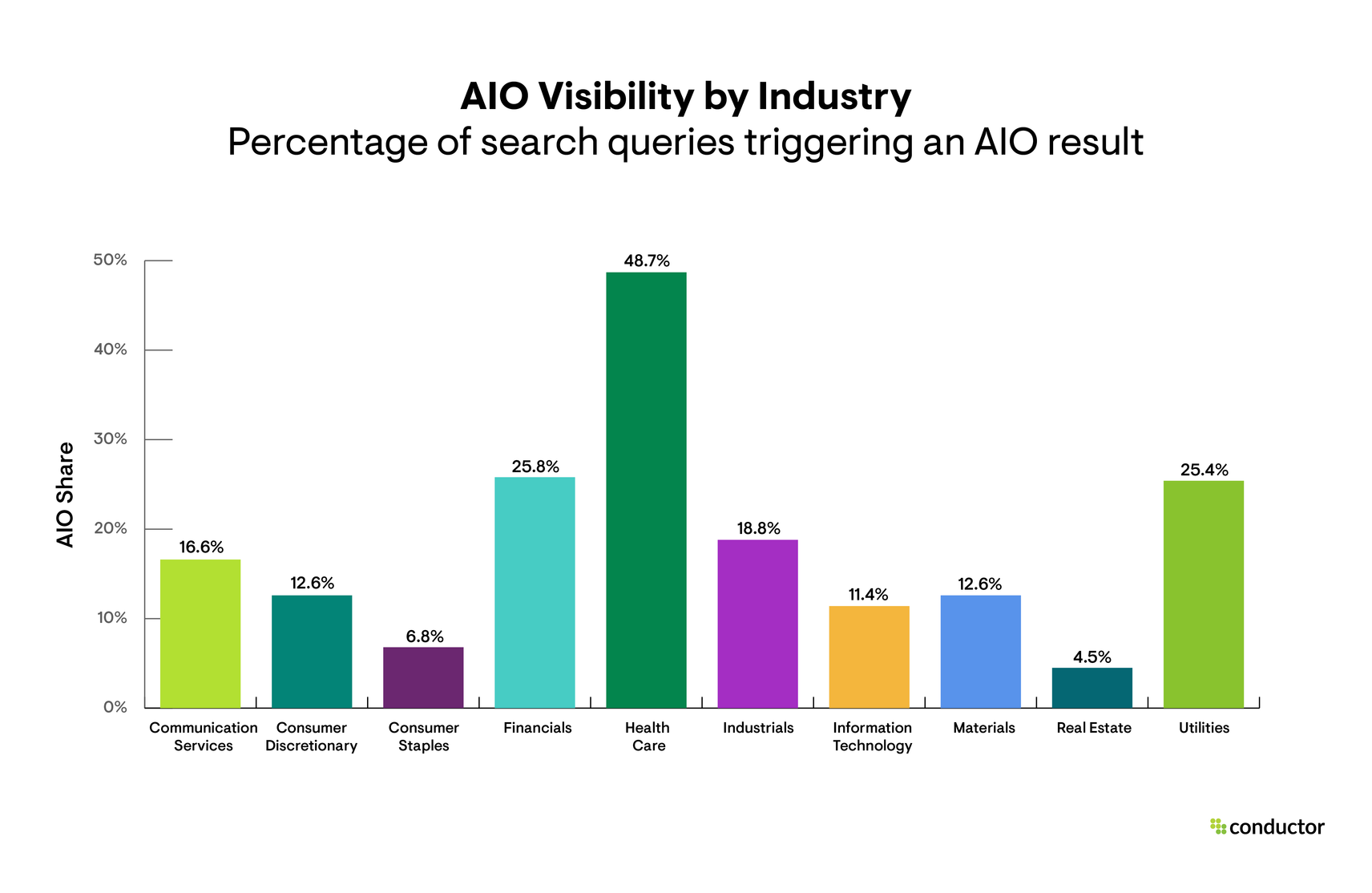
Here's what makes AIO different: it's not a separate platform you need to optimize for. AIO pulls directly from Google's existing index, which means your traditional SEO work impacts whether you show up in these summaries.
As AIO expands to commercial searches—where users are closer to making purchase decisions—tracking your visibility in these AI-generated results becomes critical for protecting brand visibility, organic traffic, and understanding your complete search presence.
Google has also introduced AI Mode, the next evolution that will handle more complex queries with advanced reasoning.
Perplexity
Perplexity takes a different approach than ChatGPT. Every answer includes visible citations to sources, making it the go-to platform for users who want transparency. Researchers, academics, and professionals who need to verify information gravitate here—they want more than just an answer, they want to see where it came from.
While Perplexity's AI referral traffic market share is smaller than ChatGPT's, the audience is valuable. These users are actively researching topics, not casually browsing.
For B2B brands and thought leaders, getting cited in Perplexity responses can drive qualified traffic from potential customers who are deep in the evaluation process. If your content is well-sourced, authoritative, and structured to answer specific questions clearly, you're well-positioned to show up here.
Gemini
Gemini is Google's conversational AI, integrated across Search, Workspace, Gmail, Google Docs, and mobile experiences. The value here isn't just about being another answer engine—it's about reach. Because it's built into Google's entire ecosystem, your content has the potential to reach users across multiple touchpoints—whether they're searching on Google, drafting an email, or working in a document.
As Google continues to invest in Gemini and expand its capabilities, tracking your visibility here isn't optional—it's strategic. Monitoring your citations and visibility in Gemini shows you whether Google's AI sees your brand as the authoritative source on topics that matter to your business. And with Conductor, you can spot exactly where you're winning (and where competitors are beating you out) so you can adjust your content strategy accordingly.
Microsoft Copilot
Microsoft Copilot lives inside Windows, Microsoft 365, and Bing—reaching professionals right where they work. When someone asks Copilot a question while drafting an email in Outlook, building a presentation in PowerPoint, or researching in Teams, they're not casually browsing. They're in work mode, often evaluating solutions or making decisions.
That context matters, especially for B2B brands. And because Copilot delivers answers directly within the tools people are already using, it eliminates the friction of switching contexts or opening new tabs. As Microsoft continues expanding Copilot's capabilities across its product suite, its influence on how professionals discover and evaluate brands will only grow.
Why ChatGPT dominates AI referral traffic
ChatGPT's majority share of AI referral traffic isn't just impressive—it's a clear signal about where you need to focus your AEO efforts. To put this in perspective, nearly 9 out of every 10 clicks coming from answer engines are flowing through ChatGPT. That kind of market dominance doesn't happen often, but when it does, it reshapes entire industries.
The pattern is familiar: a platform achieves critical mass, becomes the default choice for users, and fundamentally changes how people search for information. We've seen this play out before with Google in traditional search. Now it's happening again with ChatGPT in AI search.
Want to dive deeper into the data? Check out our 2026 AEO / GEO Benchmarks Report for a complete breakdown of answer engine traffic patterns and what they mean for your strategy.
So, what does this mean for your AEO strategy?
Understanding ChatGPT's dominance should shape how you approach answer engine optimization:
- You can't afford to ignore ChatGPT. With nearly 90% of overall AI referral traffic, ChatGPT represents the platform with the highest user adoption among answer engines. If you're not tracking your presence here or optimizing to show up in ChatGPT responses, you're missing the opportunity to reach the massive audience that's already integrated this platform into their daily search behavior.
- Dominance today doesn't mean neglecting other platforms. While ChatGPT leads by a massive margin, platforms like Perplexity, Google AI Overviews, and Gemini still matter, especially for specific audiences, industries, or use cases. The key is proportional investment: spend most of your energy where most of the traffic is, but don't completely ignore emerging platforms that could grow.
- A unified AEO approach works across platforms. The fundamentals of showing up in answer engines—creating authoritative, well-structured content that answers user questions—apply universally. Optimize for ChatGPT's standards, and you're likely optimizing for other answer engines, too. You don't need separate playbooks for each platform.
Auto vs. search: Understanding index data vs. true search data in answer engines
When you're tracking brand visibility and performance in ChatGPT, you're actually tracking two different things: auto mode and search mode. Understanding the difference matters because they represent fundamentally different ways users interact with AI—and different opportunities for your content to show up.
What’s the difference between auto and search mode?
Auto mode (Index data) draws from ChatGPT's trained knowledge base. When users ask questions in auto mode, ChatGPT generates responses based on what it learned during training—essentially pulling from a snapshot of information up to its knowledge cutoff date. Think of it like asking someone to answer based purely on what they already know.
Search mode (True search data) taps into real-time web results rather than relying solely on ChatGPT’s internal training data. When users enable search mode (or when ChatGPT determines that a query requires up-to-date information), the model performs live web lookups and cites its sources—similar to how a traditional search engineSearch Engine
A search engine is a website through which users can search internet content.
Learn more retrieves current content. Unlike auto mode, which answers based on pre-existing knowledge, search mode reflects what’s happening on the web right now and updates dynamically as online information changes.
Why track both?
Tracking only one mode gives you an incomplete picture of your AI visibility. Here's why both matter:
- Different user behaviors, different opportunities. Some users default to auto mode for quick answers and general knowledge. Others use search mode when they need current information or want to see sources. Your brand can show up in both contexts, but in different ways—as part of the training data in auto mode, or as a cited source in search mode.
- Comprehensive visibility measurement. If you're only tracking auto mode, you're missing how often your content gets cited in real-time searches. If you're only tracking search mode, you're missing whether your content influenced the model's training. Both contribute to your overall AI presence.
- Strategic insights for optimization. Seeing how you perform in both modes helps you understand where your content is strongest. Maybe you're frequently cited in search mode but rarely referenced in auto mode—that tells you your content is discoverable and authoritative, but perhaps not comprehensive enough to have influenced the training data. Or vice versa.
- Future-proofing your strategy. As LLMs evolve, the line between trained knowledge and real-time search will keep shifting. Models are getting better at knowing when to pull from training versus when to search the web. Understanding your presence in both modes helps you adapt as these systems change.
How Conductor tracks auto and search mode in ChatGPT
Conductor splits ChatGPT tracking into two separate views: ChatGPT (auto) and ChatGPT (search).
This gives you granular visibility into both types of performance, so you can see exactly where your content is showing up and optimize accordingly. Instead of guessing whether you're appearing in the model's base knowledge or getting cited in real-time searches, you get clear data on both so you can optimize accordingly.
Getting started with answer engine tracking
Ready to start tracking your answer engine performance? Here's how to approach it strategically.
What to track first
Start with ChatGPT—both auto and search modes. With a majority of AI referral traffic coming through ChatGPT, this is where you'll see the most immediate impact and the clearest data on your AI visibility. Track both modes from the start so you understand how you're showing up in trained responses versus real-time search results.
Next, prioritize Google AI Overviews. If you're already tracking traditional Google rankingsRankings
Rankings in SEO refers to a website’s position in the search engine results page.
Learn more, adding AIO visibility is a natural extension. You're likely already optimizing for the content that AIO pulls from, so tracking it gives you visibility into how AI is reshaping your search presence and brand relevance.
From there, expand to Perplexity and Gemini. These platforms have smaller but valuable audiences, and tracking them rounds out your understanding of the answer engine landscape. If you're in B2B or target research-focused audiences, prioritize Perplexity. If you're heavily invested in Google's ecosystem, Gemini becomes more important.
Tracking prompts is easy. Tracking the right prompts is harder. Our guide How to Set Up AI Prompt Tracking for AI Search Visibility shows how to avoid prompt sprawl and focus on the topics that actually influence AI visibility.
Key AEO metrics to report on
Prioritize these metrics to understand your answer engine performance:
- Citation frequency: How often are you being cited as a source? This is the answer engine equivalent of ranking—if you're not getting cited, you're invisible.
- Brand mentions: Even without a direct citation, are answer engines mentioning your brand name in responses? This indicates brand awareness and authority in your space.
- Share of voice: Your percentage of visibility compared to competitors. This shows whether you're dominating your category or getting drowned out by the competition.
- Sentiment analysis: The tone AI engines use when discussing your brand. Positive sentiment reinforces authority; negative sentiment signals a need to address content gaps or reputation issues.
- Traffic referrals: Track how much traffic is actually coming from answer engines. This tells you whether visibility is translating into clicks and engagement.
Best practices for answer engine tracking
Consistency is key. Track your performance regularly over time to identify trends and patterns. A single snapshot doesn't tell you much, but tracking daily, weekly, and monthly changes reveals whether your optimization efforts are working.
Compare performance across engines. You might find you're strong in ChatGPT but weak in Perplexity, or vice versa. Understanding these differences helps you identify where to focus improvement efforts.
Analyze which content gets cited most. Your highest-performing content in answer engines might not be the same content that ranks well in traditional search. Pay attention to what's working and double down on those topics and formats.
Use the data to adjust your strategy. If you're not showing up for key topics in your industry, that's a gap to fill. If competitors are dominating certain question types, that's an opportunity to create better, more authoritative content.
In summary
The bottom line is: You don't need to track every answer engine that launches—just the ones where your audience is actually searching. Today, ChatGPT, Google AI Overviews, Perplexity, and Gemini have the highest user adoption rates and are driving the most traffic to brands. Tracking both auto and search modes ensures you're seeing the full picture of your AI visibility.
As long as you create original, expert-driven content that thoroughly answers user questions, you'll be positioned to show up across all answer engines.
Start where your audience is searching, measure what moves the needle, and use the data to improve. With consistent tracking, you'll identify opportunities competitors are missing and position your brand as the authority answer engines want to cite.
FAQs
- What is an answer engine?
- What is answer engine optimization (AEO)?
- What's the difference between AEO and GEO?
- How do I maximize my visibility in AI search results?
- What is Google AI Mode, and how does it differ from AI Overviews?