
Best AI Writing Tools in 2026: Reviewed for AEO Performance
AI writing tools are easy to find in 2026, but most are built to generate content, not help it perform. As search evolves across traditional results, AI Overviews, and answer engines, content needs to be aligned with real search demand and structured for discovery. That’s where these AI writing tools stand apart.
Instead of prioritizing speed alone, they help teams create content that earns visibility, trust, and long-term value. This guide breaks down which tools actually support SEO and AEO outcomes, and which ones stop at draft generation.
AI writing tools are everywhere. From general-purpose chatbots to enterprise-level writing assistants, content teams have no shortage of options promising faster drafts and infinite output.
But speed isn’t the problem anymore. Performance is.
Search has changed. Content now needs to work across traditional SEO results, AI Overviews, and answer engines powered by LLMs. Early AI content generators were built for speed, and many modern tools still treat writing as the end goal—without helping teams understand whether content aligns with search intent or earns visibility once published.
That’s where this guide comes in. Instead of ranking tools by popularity or feature lists, we evaluate how well they support real SEO and AEO outcomes for how content is discovered today.
How we evaluated the best AI writing tools
Most AI writing platform roundups focus on features, templates, or how natural the output sounds. That’s not how modern content teams work, so we opted for a different evaluation approach that maps to their actual workflows and goals.
What does that look like in practice? Evaluating whether a tool helps teams create content that AI-powered search systems can actually understand and surface with confidence.
Many tools struggle here—not because they can’t generate text, but because they lack access to the high-quality search data needed to understand real intent, entityEntity
An entity is a thing/concept that search engines and AI models can identify and relate to other entities, forming the foundation of semantic search.
Learn more relationships, and what actually earns visibility across modern search experiences.
That limitation shaped our evaluation approach. To build this list, we looked at how AI writing tools support real content workflows and performance outcomes. That means evaluating not just whether a tool can generate on-brand copy, but how well it helps teams create content that aligns with AI-powered search discoverability, scales responsibly, and drives results.
Specifically, we evaluated each tool based on:
- Generated content quality and usefulness
- Alignment with real search intent data
- Readiness for SEO and AEO
- Workflow fit for real content teams
- Governance, control, and scalability
The result is a vetted list and ranking based on how well AI writing tools meet these criteria, not how fast they can churn out unhelpful AI slop.
Want a closer look at how AEO tools support modern search? The 10 Best AEO / GEO Tools: Ranked and Reviewed breaks down the platforms built for visibility in AI-driven search experiences.
The best AI writing tools in 2026
Below are the leading AI writing tools content teams are using in 2026—based on how they actually perform in real-world workflows. Each review breaks down what a tool does well, where it struggles, and when it makes sense to use.
#1: Conductor AI Writing Assistant
What Conductor is best at
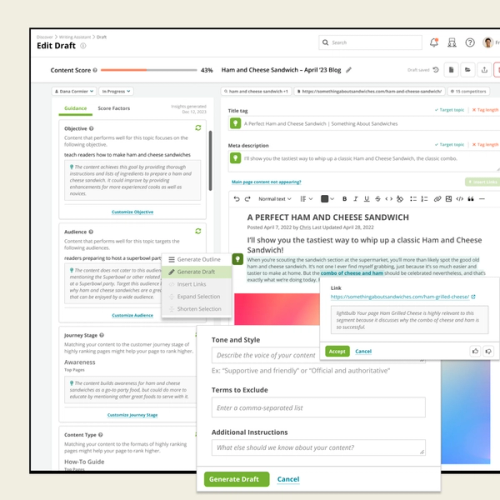
Conductor AI Writing Assistant is best at helping content teams create high-quality website content that’s grounded in real search demand and built to perform across SEO and AEO. Instead of treating AI content generation as a blank slate, it anchors content creation to search intent, entities, and real performance insights, so content is built for visibility, not just speed.
Content performance isn’t an afterthought with this tool—it’s the entire focus.
Where Conductor shines for content teams
Conductor stands out by grounding AI content generation in industry-leading search and content intelligence, not generic training data. Instead of treating AI as a standalone drafting tool, Conductor integrates AI directly into a broader content performance system, informed by real search behavior, intent signals, and topic-level insights.
One of its core capabilities is Knowledge Sources, which allows teams to input their own brand knowledge, context, and style guidelines alongside Conductor’s trusted search data. The result is AI-generated contentAI-Generated Content
AI-generated content is text, images, or designs produced by AI systems based on human inputs that mimic human writing style.
Learn more that reflects how your brand actually sounds—and is built on the same intelligence teams rely on to earn visibility, credibility, and long-term performance in search. This gives enterprise teams built-in quality control, even as AI content scales across teams.
Another key differentiator is Content Score, which evaluates how well a piece of content addresses its target topic, aligns with search intent, and meets AI-driven quality expectations.
Rather than offering generic suggestions, it provides a clear score and actionable recommendations content marketers can use to improve topic coverage, clarity, and search performance before publishing.
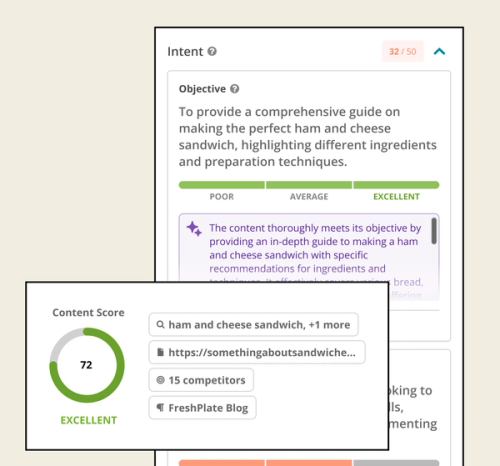
Together, these capabilities help teams move beyond simple draft generation toward content generation that’s designed to earn visibility across search experiences.
Where it falls short
Because it’s built for enterprise-level content performance, AI Writing Assistant isn’t intended for quick, disposable, short-form copy. Teams looking primarily for lightweight AI writing for ads or social captions should opt for simple text generation tools instead.
Who Conductor’s AI Writing Assistant is best for
- Enterprise and mid-market content teams
- SEO/AEO and content leaders responsible for driving measurable outcomes
- Organizations prioritizing search visibility, AEO readiness, and content longevity
#2: Writer
What the tool is best at
Writer is best at helping large enterprises operationalize AI writing safely at scale. It’s designed for organizations where brand integrity, compliance, and internal governance are non-negotiable and where AI must fit into existing content operations without introducing risk.
Where it shines for content teams
Writer earns its place near the top of this list because it solves a significant challenge many AI writing tools don’t: enterprise control.
The platform allows teams to codify brand voice, terminology, and usage rules directly into the AI, ensuring content is generated within clearly defined boundaries. This makes it especially valuable for organizations operating in regulated industries or with high legal, brand, or reputational risk.
Writer also supports structured review and rewrite workflows, helping teams bring AI into production environments without breaking existing editorial or compliance processes. For enterprises producing content across multiple business units, this level of control can be the difference between experimenting with AI and actually deploying it at scale.
Where it falls short
Writer’s focus on governance comes at the expense of search performance insights. It doesn’t natively connect AI writing to search intent, entity coverage, or SEO and AEO optimization signals.
On-brand content? Absolutely. On-brand content that ranks on page one or earns AI search citations? Unlikely.
For teams whose primary goal is organic visibility, Writer often needs to be paired with additional SEO or content performance tools to ensure content is discoverable across modern search and AI-driven answer experiences.
Who it’s best for
- Large enterprises with strict brand, legal, or compliance requirements
#3: Semrush SEO Writing Assistant
What the tool is best at
Semrush SEO Writing Assistant is best at helping content teams optimize AI-assisted writing for traditional SEO. It’s designed for teams that already rely on Semrush for keywordKeyword
A keyword is what users write into a search engine when they want to find something specific.
Learn more research and want in-editor guidance to improve on-page optimization as they write.
Where it shines for content teams
The main strength of SEO Writing Assistant is its direct connection to Semrush’s SEO data. As content is written, the tool provides recommendations related to keyword usage, readability, tone, and basic on-page factors, helping teams align drafts with what currently ranks in traditional search results.
For teams producing SEO-driven blog content at scale, this can reduce the back-and-forth between drafting and optimization. The tool works especially well when paired with existing Semrush workflows, allowing writers and SEO practitioners to collaborate more efficiently without leaving the editor.
Where it falls short
SEO Writing Assistant is largely focused on traditional SEO signals. It doesn’t extend deeply into entity modeling, topical authorityTopical Authority
Topical authority is the expertise and credibility a website demonstrates on a subject through comprehensive, interconnected, high-quality content.
Learn more, or AEO-specific considerations that influence how content appears in AI Overviews or LLM-generated answers. That’s not to say content written by this tool won’t be cited or mentioned by AI (it’s just less likely to).
It also offers limited support for governance, collaboration, and brand consistency compared to enterprise-oriented AI writing platforms. As a result, it’s better suited to tactical optimization than long-term content performance strategy.
Who it’s best for:
- SEO-driven content teams already using Semrush
- Writers focused on keyword-based blog and page optimization for traditional search engines
- Organizations looking to improve on-page SEO efficiency
#4: Surfer AI
What the tool is best at
Surfer AI is best at helping content teams optimize drafts in real time based on what’s currently ranking in search results. It’s built for users who want clear, data-driven guidance on how to structure and optimize content for competitive SERPs.
Where it shines for content teams
Surfer AI’s strength lies in its SERP-driven approach. The platform analyzes top-ranking pages for a given query and translates those patterns into live recommendations around content length, structure, headings, and keyword usage.
For SEO-focused teams, this real-time feedback can be especially useful when working in competitive spaces or updating existing content. It helps writers understand how their draft compares to what’s already performing in traditional search and make targeted improvements without guesswork.
Surfer also integrates well into hands-on SEO workflows, making it a popular choice for agencies and in-house teams that want fast, tactical optimization guidance.
Where it falls short
Surfer AI primarily focuses on optimizing for current SERP patterns. It doesn’t deeply address search intent nuance, entity relationships, or broader topical authority. To say it plainly: it’s optimized for Google’s past, not the AI search future.
The platform also offers limited support for brand governance, collaboration, or long-term content strategy. As a result, it works best as a point solution for optimization rather than a comprehensive AI writing or content performance platform.
Who it’s best for
- SEOs and agencies focused on competitive SERPs
- Teams optimizing existing content or producing SEO-driven blog posts
#5: Frase
What the tool is best at
Frase is best at helping content teams research topics and build strong content briefs. It’s designed to support the planning stage of content creation by surfacing common questions, themes, and competitive coverage around a topic.
Where it shines for content teams
Frase shines before the first word is written. Its core strength is its ability to analyze top-ranking content and extract patterns that inform what a piece of content should cover. By summarizing key subtopics, questions, and competitor angles it helps teams move from topic selection to draft creation with more clarity and structure.
For SEO teams and content strategists, Frase can significantly reduce the time spent on manual research. It’s especially useful for creating briefs that align writers around scope and expectations before writing begins.
Where it falls short
While Frase supports early-stage planning well, it’s less robust as a writing and optimization tool. Its AI-generated drafts are more generic, and it offers limited guidance around search intent depth, entity relationships, or AEO-specific considerations.
Frase also lacks the governance, workflow, and performance insights needed for teams managing content at scale or optimizing for long-term visibility across evolving search experiences.
Who it’s best for
- SEO teams focused on topic research and content planning
- Content strategists creating briefs for consultants or contributing writers
- Organizations looking to speed up early-stage research workflows
#6: Jasper
What the tool is best at
Jasper is best at helping marketing teams produce high volumes of campaign-driven copy quickly. It’s designed for speed and flexibility across short-form marketing use cases, rather than deep optimization for search performance.
Where it shines for content teams
Jasper is widely adopted by marketing teams because it reduces the friction between idea and execution. The platform offers pre-built workflows and templates for ads, emails, landing pages, and social content, making it easier for non-SEO specialists to generate usable drafts without extensive setup.
Jasper also supports brand voice configuration, allowing teams to guide tone and messaging across campaigns. In practice, this makes it easier for teams to scale promotional content while maintaining a consistent voice, especially during product launches or multi-channel campaigns.
For organizations running frequent campaigns, Jasper functions as a creative production engine, helping teams iterate quickly, test messaging, and keep up with content demands across channels.
Where it falls short
Jasper is not designed around search performance. It doesn’t natively incorporate search intent analysis, entity coverage, or SEO and AEO optimization signals into the writing process.
Because of that, long-form content created in Jasper often requires significant additional work to perform well in organic search or appear in AI-driven answer experiences.
Who it’s best for
- Marketing teams producing campaign, ad, and promotional copy
- Organizations prioritizing speed and volume over search optimization
- Teams running multi-channel marketing initiatives
#7: Copy.ai
What the tool is best at
For teams focused on speed and ideation, Copy.ai serves as a fast, lightweight way to generate short-form marketing copy. It’s designed to help non-technical users move from prompt to draft with minimal setup.
Where it shines for content teams
Copy.ai’s appeal comes from its guided workflows. Instead of starting from a blank page, users are led through common marketing tasks, such as writing social posts, emails, or product descriptions, using structured prompts and predefined flows.
This makes the platform especially useful for lean marketing teams that need to produce a steady stream of promotional content but don’t have dedicated SEO resources or complex editorial processes. In practice, Copy.ai often functions as an ideation engine, helping teams generate angles, headlines, and first drafts they can refine elsewhere.
Where it falls short
Because it’s optimized for simplicity, Copy.ai offers little support for content performance. It doesn’t provide insight into search intent, topic depth, or SEO and AEO considerations, and it lacks the governance features required for consistent, large-scale content programs.
For teams responsible for organic visibility or evergreen content, the output typically requires significant additional work before it’s publish-ready.
Who it’s best for
- Marketing teams producing short-form, promotional content
- Organizations prioritizing ease of use and fast ideation
- Teams without established SEO or content performance tools and data
#8: Writesonic
What the tool is best at
Writesonic occupies a different role in the AI writing landscape: accessibility. It’s built to give individuals and small teams broad AI writing capabilities without the cost or complexity of enterprise platforms.
Where it shines for content teams
The platform offers a wide range of writing options, from blog drafts to basic marketing copy, making it a common choice for early-stage teams experimenting with AI. For organizations with limited budgets, Writesonic can cover many basic writing needs in one place.
In practice, it’s often used as a general-purpose drafting tool, helpful for getting ideas on the page, but not designed to guide strategy, performance, or optimization.
Where it falls short
That flexibility comes with tradeoffs. Writesonic provides limited guidance around search intent, entity coverage, or AEO readiness, and its output quality can vary significantly depending on prompts and use case.
It also lacks the governance, collaboration, and quality controls required for teams managing content at scale or operating in regulated environments.
Who it’s best for
- SMBs and startups exploring AI writing for the first time
- Individuals or small teams with budget constraints
- Low-risk or non-strategic content creation
#9: ChatGPT and free AI writing tools
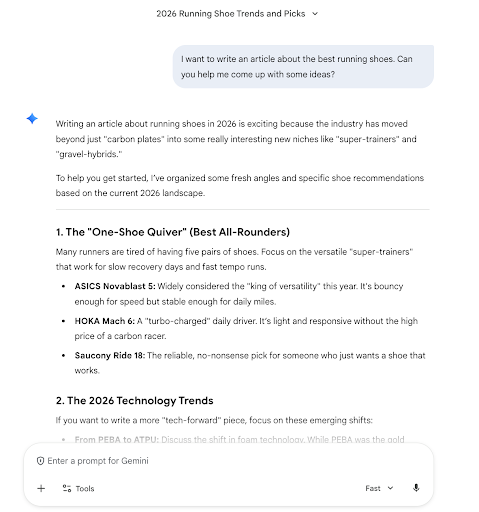
This group includes free or freemium AI tools such as ChatGPT (free), Claude (free), Gemini, Microsoft Copilot, Writesonic’s free tier, and similar tools designed for individual users or budget-constrained teams. Availability, features, and data usage policies vary by plan and may change over time.
Rather than reviewing each tool individually, they’re grouped here because they share similar strengths (and similar limitations) when it comes to SEO, AEO, and content performance.
Included tools
- ChatGPT: The most widely used free AI writing tool
- Claude: Known for long-form content generation and reasoning quality
- Gemini: Common choice for Google-native users
- Microsoft Copilot: Often used within Word, Edge, or Windows workflows
- Writesonic (free tier): A strong example of a capped freemium AI writing tool
What the tools are best at
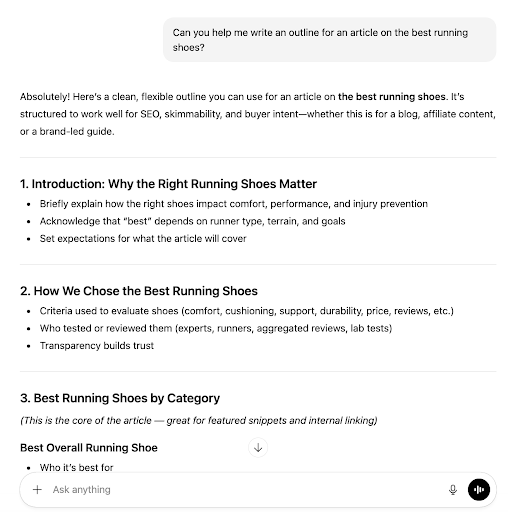
Free AI writing tools are best suited for ideation, experimentation, and low-risk copy drafting. They can help users brainstorm ideas, explore topics, develop content outlines, or generate rough first drafts without friction or cost.
Where they shine for content teams
For individual content creators and small marketing teams, free tools provide a fast way to experiment with AI writing. They’re often used early in the creative process, or for content that doesn’t need to meet strict quality, governance, or performance standards.
Where they fall short
Free AI writing tools can be useful, but they come with tradeoffs that matter for enterprise content teams. Most free plans use submitted content and files to train LLMs, which can introduce significant data privacy risks, brand and IP exposure, and compliance concerns, especially for regulated industries.
Paid versions of these tools typically do not train on customer data and offer stronger safeguards, but they still lack built-in guidance around search intent, entity coverage, or AEO optimization.
The bottom line: They’re powerful, widely used—and almost never built for performance. When leveraged for long-form or on-brand content generation, these tools can introduce significant data and brand risks and fail to perform in search.
Who they’re best for
- Individuals, SMBs, and teams with minimal budgets
- Low-risk, experimental, or internal content needs
Features are easy to compare. Outcomes are not. The Strategic Buyer’s Guide to AI Writing Assistants outlines the key questions buyers should ask (and answer) when evaluating tools for real content and search performance.
FAQs about AI writing tools
What’s the difference between AI writing tools and AI writing assistants?
AI writing tools typically focus on generating text like drafts, rewrites, or short-form copy based on prompts. AI writing assistants go a step further by embedding writing into a broader workflow and often include guidance around structure, optimization, and quality.
For content teams responsible for performance, writing assistants are more likely to support consistency, optimization, and collaboration, while basic writing tools primarily focus on speed and output.
Are free AI writing tools good enough for SEO and AEO?
Free AI writing tools can be helpful for ideation and low-risk drafting, but they shouldn’t be relied on for SEO or AEO on their own.
They usually lack insight into search intent, entity coverage, and content structure. These factors influence how content ranks in traditional search results and appears in AI-generated answers.
Can AI writing tools replace human writers?
No. However, they can significantly accelerate human writers.
AI writing tools work best as collaborators that assist with research, drafting, and optimization. Humans play a critical role in strategy, subject-matter expertise, editing, and decision-making.
How do AI writing tools affect content quality?
AI writing tools can improve quality when used thoughtfully, but they can also introduce issues such as redundancy, hallucinations, or overly generic content if left unchecked.
The strongest results come from human-in-the-loop workflows. In these setups, AI supports drafting and analysis while humans guide direction, verify accuracy, and refine the final output.
Do AI writing tools help content rank in Google or appear in AI answers?
AI-generated content is not inherently penalized by Google or excluded from AI answers. Performance depends on how well the content aligns with search intent, demonstrates usefulness, and is optimized for how search engines and AI systems interpret information.
In short, it’s not about who wrote the content. It’s about how the content is structured and evaluated.
What should teams look for in an AI writing tool in 2026?
Teams should evaluate AI writing tools based on outcomes. Important considerations include alignment with search intent, support for SEO and AEO readiness, governance and data safeguards, workflow fit, and the ability to scale without sacrificing quality.
The most effective tools help content perform better over time, not just get published faster.
Best AI writing tools: What’s the bottom line?
Having an AI writing tool is no longer an advantage. Creating content that performs across AI-driven search experiences is.
What separates the best tools in 2026 is not how much content they can generate, but whether that content earns visibility, trust, and engagement from LLMs and users across modern search experiences.
In a world where anyone can publish faster, the winners are the teams whose content shapes the answers.