
HTTP Body Snapshot



What Is HTTP Body Snapshot? Why Does It Matter?
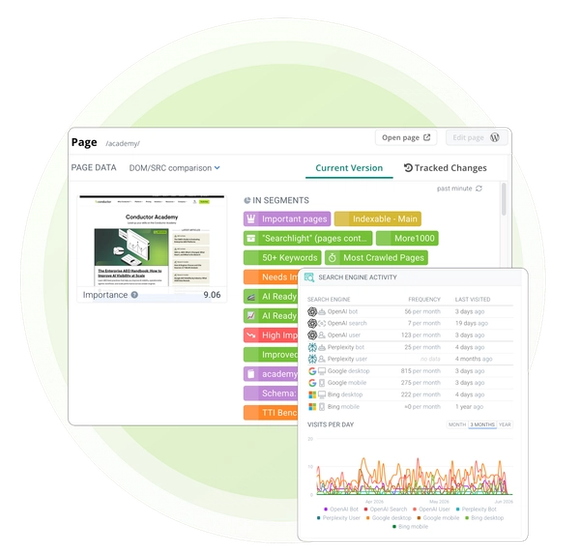
An HTTP Body Snapshot is the complete response payload your server sent when a page was crawled. It includes the HTTP request and response headers, the response body (the raw HTML or data returned), and the rendered DOM snapshot showing the page as it appeared after JavaScript execution.
What your users see and what crawlers receive are not always the same. Server-side redirects, caching layers, CDN configurations, A/B testing frameworks, and JavaScript rendering can all make the crawled version of a page differ from the intended version. Without the full response record, these discrepancies go undetected until they surface as ranking drops or indexing anomalies.
Conductor captures and stores the complete snapshot at every crawl point, so your team can review exactly what search engines and AI crawlers received. That gives you the forensic detail to diagnose rendering issues, detect alternate page versions being served to bots, and confirm that fixes are working as intended.
Why Full Response Visibility Matters
Most monitoring platforms tell you that something changed on a page. HTTP Body Snapshot tells you exactly what the crawler received at that moment, the forensic depth that metadata-level monitoring cannot surface.
- Alternate Page Versions: CDNs, A/B testing platforms, and edge-side includes can serve different page versions to different requestors. Without the full response body, your team cannot confirm whether crawlers received the canonical version or an alternate that may confuse indexing. HTTP Body Snapshot captures exactly what was served, so discrepancies are caught early.
- Rendering Diagnosis: When JavaScript modifies page content after the initial HTML response, the rendered DOM may differ from the source. HTTP Body Snapshot stores both the raw response and the rendered output, so teams compare the two and identify rendering mismatches that affect what search engines and AI crawlers index.
- Rank Fluctuation Investigation: Persistent rank fluctuations are often caused by content changes that standard monitoring does not surface. By reviewing the full response payload at each crawl point, teams determine whether content modifications are driving the volatility or whether external factors unrelated to on-page changes are the cause.
How Conductor Captures and Delivers HTTP Body Snapshots
Conductor captures the complete HTTP response at every crawl point and stores it as part of your site's historical record. Each snapshot is accessible directly from the page's changelog entry, so diagnosis is one click from the change that triggered the investigation.
Three layers of response data are captured in every snapshot:
- HTTP Headers: View the full request and response headers, including status codes, cache control directives, content type, server information, and redirect chains. Identify misconfigurations at the server level that affect how crawlers process your pages.
- Response Body: Access the raw HTML or data payload your server returned. Compare response bodies across crawl points to identify when content was added, removed, or modified, and confirm whether the intended version is being served to crawlers.
- Rendered DOM: View the page as it appeared after JavaScript execution. Compare the rendered output to the raw response body to detect rendering mismatches, missing dynamic content, or JavaScript-injected elements that crawlers may process differently than browsers.
Putting Body Snapshot into Action
Related Resources and Guides



Explore Changelog
Did You Know?
This page was created using Writing Assistant in Conductor Creator. Learn more:


