
Change Tracking



What Is Change Tracking? Why Does It Matter?
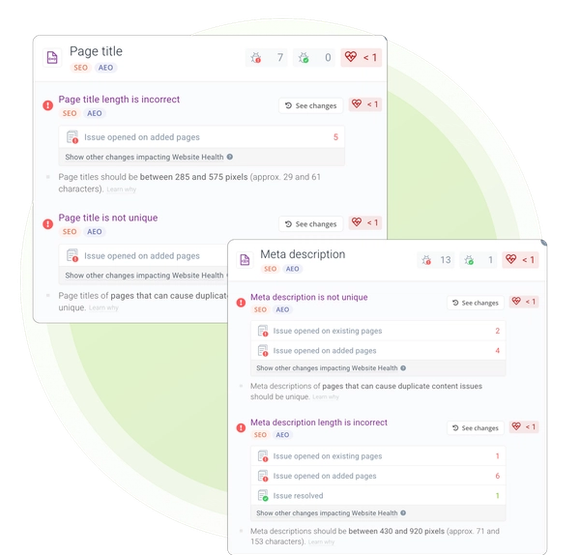
Change Tracking is a continuous audit trail that records every modification to your site's pages in real time. Every update to page titles, meta descriptions, hreflang tags, status codes, canonical URLs, and other on-page elements is captured with a timestamp, a before-and-after comparison, and the affected URL.
Websites are dynamic. Content teams publish updates, engineering deploys code, CMS platforms auto-generate pages, and third-party scripts modify elements without warning. Any of these changes can affect search rankings, AI citation eligibility, or user experience. Without a changelog, diagnosing the root cause of a performance shift is slow, unreliable, and often inconclusive.
Conductor captures every change as it happens and presents it in a searchable, filterable changelog. Teams trace any performance shift back to the specific page modification that caused it, enforce governance across contributors, and measure the impact of their optimizations over time.
Why a Complete Change Record Matters
Enterprise websites change constantly. Without a system that captures every modification, teams operate with incomplete information, diagnosing issues reactively and missing the connection between site changes and performance outcomes.
- Root Cause Diagnosis: When traffic drops, the cause is almost always a site change. A title tag modification, a canonical URL shift, an hreflang removal, or a status code change can each trigger ranking and visibility impacts. Change Tracking lets you trace the performance shift back to the exact modification, on the exact page, at the time it occurred.
- Content Governance at Scale: Large organizations have multiple teams publishing and modifying content at once. Without a central changelog, unauthorized changes, inconsistent metadata, and conflicting optimizations go undetected. Change Tracking creates accountability by recording every modification, so teams can enforce protocols and maintain consistency across contributors.
- Optimization Impact Measurement: Knowing what changed is only half the picture. Change Tracking also lets you measure the impact of your optimizations by connecting specific changes to subsequent performance shifts. This closes the feedback loop between action and outcome, so teams learn what works and replicate it.
How Conductor Tracks Every Change
Conductor's Change Tracking runs continuously alongside 24/7 monitoring, capturing every page modification as it happens. Changes are recorded with full context: what element changed, its previous value, its new value, and the timestamp, so diagnosis is immediate and precise.
Three capabilities make Change Tracking actionable:
- Complete Element Coverage: Track changes to page titles, meta descriptions, hreflang tags, canonical URLs, status codes, robots directives, and more. Every tracked element is recorded with before-and-after values, so you see exactly what shifted and can assess the impact immediately.
- Real-Time Change Detection: Changes are captured continuously, not on a scheduled crawl cycle. When a deployment modifies metadata across hundreds of pages, Change Tracking records every modification as it happens, so your team can respond before search engines re-index the affected content.
- Searchable Change History: Filter and search changes by element type, date range, URL pattern, or change category. Investigate specific incidents, audit historical modifications, or review all changes made to a page group during a defined window, all without leaving Conductor.
Putting Change Tracking into Action
Related Resources and Guides



Explore Changelog
Did You Know?
This page was created using Writing Assistant in Conductor Creator. Learn more:


