
Write for the Audience Behind the Search



What Is Intent Alignment and Why Does It Matter?
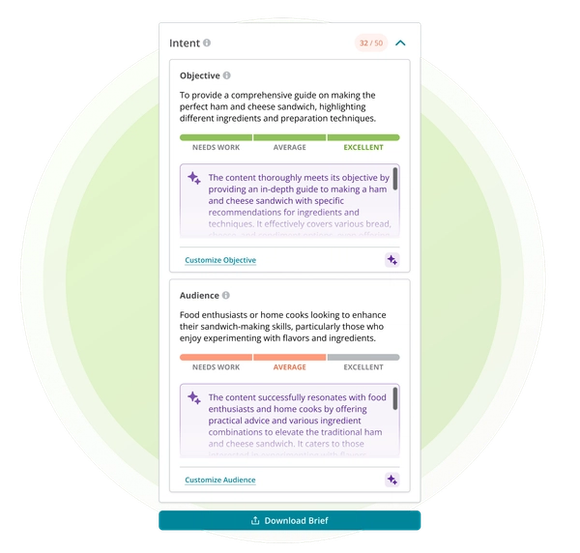
Intent Alignment is one of the two core dimensions in Content Score. It evaluates how well a draft meets its configured objective, serves the target audience, and fits the selected stage in the customer journey.
A draft can cover a topic thoroughly and still miss what the reader needs. The framing may be too broad, the depth may not suit the audience’s understanding, or the content may ask for action before the reader is ready.
Intent Alignment updates as your team edits in Writing Assistant, providing a directional signal for revision while your reviewers keep the final publication decision.
Why Audience Intent Matters for Content Quality
Useful content connects subject matter with the reason a person is searching. Intent Alignment keeps the reader, the business objective, and the journey stage visible throughout the drafting process.
- Fulfill the Content Objective: Evaluate whether the draft gives readers the knowledge or direction defined in the brief instead of drifting away from the page’s purpose.
- Match the Audience’s Understanding: Check whether the explanation, terminology, and depth are appropriate for the people the content is meant to serve.
- Support the Journey Stage: See whether the content meets readers where they are, from learning about a problem to evaluating a solution or taking action.
How Conductor Evaluates Intent Alignment
Conductor compares the draft with the objective, audience, and journey stage configured in Writing Assistant. Each assessment includes a score, explanation, and prioritized improvements for the next revision.
- Evaluate Objective Fulfillment: See whether the content delivers the outcome established in the brief and where the message needs greater focus.
- Assess Audience Fit: Understand whether the draft addresses the target audience’s needs and level of understanding with appropriate depth and clarity.
- Review Journey-Stage Fit: Identify where the content should educate, support evaluation, or guide action more effectively for the selected stage.
Put Intent Alignment Into Action
Related Resources and Guides


Did you know?
This page was created using Writing Assistant in Conductor Creator. Learn more:


