
Lighthouse Core Web Vitals



What Are Lighthouse Core Web Vitals? Why Do They Matter?
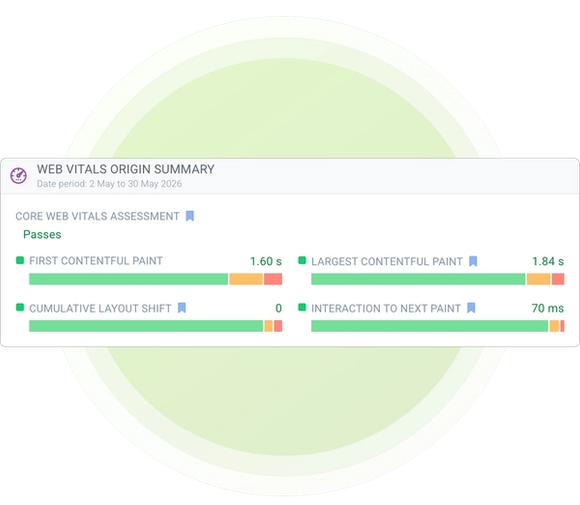
Core Web Vitals are the page experience signals Google uses to evaluate how fast, responsive, and visually stable your pages are. Lighthouse is the open-source engine that measures these signals in a controlled lab environment, producing reproducible scores you can use to diagnose issues and validate fixes before they reach real users.
Running Lighthouse at scale is hard. Individual page tests produce variable results depending on network conditions, ad scripts, and analytics overhead. Conductor runs consistent, controlled Lighthouse tests across your entire site and blocks monitoring-related requests that would otherwise inflate load times and skew the data.
The result is clean performance data tied directly to the metrics that matter: Google Search Console rank positions, GA4 organic traffic, and page-level speed scores. Teams identify which pages are slowest, understand why, fix the root causes, and watch the impact on organic visibility over time.
Why Consistent Core Web Vitals Measurement Matters
Page speed affects rankings, engagement, and conversion. But without consistent, reproducible measurement, teams cannot separate real performance problems from measurement noise, and they cannot prove whether their optimizations are working.
- Reproducible Diagnostics: One-off Lighthouse tests produce different scores depending on network conditions, server load, and third-party scripts. Conductor runs controlled tests with consistent conditions, so results are reproducible, root causes are clear, and fixes can be validated before they reach real users.
- Clean Data Without Monitoring Overhead: Analytics and ad tracking requests inflate page load times during testing, producing scores that reflect monitoring overhead rather than real user experience. Conductor blocks these requests during measurement, so your performance data reflects actual page speed.
- Speed Connected to Business Outcomes: A fast page nobody visits is not a priority. A slow page that drives significant revenue is. Connecting Core Web Vitals scores to GSC and GA4 data lets teams prioritize speed fixes by business impact, focusing on the pages where performance improvements translate to measurable gains in rankings and traffic.
How Conductor Measures and Connects Core Web Vitals
Conductor builds Lighthouse lab testing directly into its monitoring infrastructure, so Core Web Vitals measurement runs alongside your existing crawl schedule. No separate performance testing setup, no manual page-by-page audits, no third-party integrations to maintain. Three capabilities deliver actionable speed intelligence.
Three capabilities deliver actionable speed intelligence:
- Site-Wide Lighthouse Testing: Run consistent Lighthouse lab tests across every monitored page, not just a sample. Diagnose issues with reproducible data, so root causes are clear and fixes can be validated before they reach production. Issues surface with enough detail to act on immediately.
- Analytics-Blocked Measurement: Conductor blocks analytics, ad tracking, and other monitoring requests during Lighthouse tests, so performance scores reflect actual page speed. This removes the inflated load times that make standard Lighthouse results unreliable at scale and keeps your data clean enough to base decisions on.
- GSC and GA4 Integration: Connect Core Web Vitals performance to Google Search Console rank positions and GA4 organic traffic in a single view. See each page's speed score alongside its search visibility and click-through rate, so you can watch how speed improvements translate to organic performance over time.
Putting Core Web Vitals into Action
Related Resources and Guides



Explore Page Health
Did You Know?
This page was created using Writing Assistant in Conductor Creator. Learn more:


