
Segments



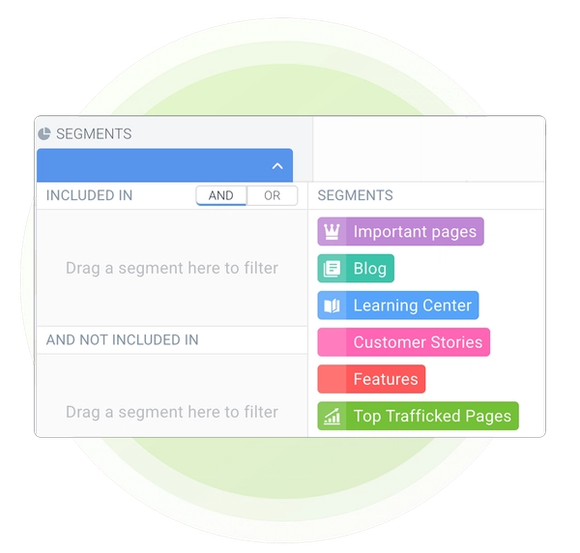
What Are Segments? Why Do They Matter?
Segments are dynamic page groups that organize your site around the dimensions that matter to your business. Instead of reviewing monitoring data for your entire site at once, teams create segments based on any filter criterion: page type, traffic level, geography, product line, template, or custom attributes.
Segments update automatically as your site changes. When new pages are added or attributes shift, segment membership adjusts without manual work. Your monitoring always reflects the current state of your site.
Combined with segment-specific alerts, this creates a precision monitoring system where each team gets only the notifications relevant to their pages and priorities. No cross-team spam, no alert fatigue, no missed signals on the pages that drive revenue.
Why Segment-Based Monitoring Matters at Enterprise Scale
As sites scale across markets, products, and content types, monitoring data grows faster than any team can review by hand. Segments let teams focus on exactly the pages they own and the issues that affect their priorities.
- Cross-Team Precision: Different teams care about different pages. Your ecommerce team needs alerts on purchase funnel errors. Your content team needs to know when blog pages lose traffic. Your international team needs visibility into hreflang issues by market. Segments route monitoring data to the right team without forcing everyone through the same global view.
- Revenue Page Protection: Not all pages carry equal business value. Segments isolate your highest-traffic and highest-converting pages into a dedicated group with its own alert thresholds, so issues on revenue-driving content surface immediately instead of getting buried in a site-wide crawl report.
- Dynamic Accuracy Without Manual Maintenance: Static page lists go stale as sites evolve. Segments use dynamic filter rules that update membership as pages are added, removed, or reclassified. Your monitoring structure stays accurate without anyone rebuilding filters after every deployment or content update.
How Conductor Delivers Dynamic Segmentation
Conductor's segmentation is built for the complexity of enterprise sites. Segments are defined by flexible filter rules, update automatically, and integrate directly with alerting and prioritization, so every team gets a focused, relevant monitoring experience.
Three capabilities make segmentation actionable at scale:
- Flexible Filter Rules: Create segments using any combination of page factors: traffic level, template type, geography, product line, content category, or custom attributes. Combine filters to build segments that match how your business thinks about its site, not how a crawler organizes URLs.
- Automatic Membership Updates: Segment rules are dynamic. As pages are published, change attributes, or get reorganized, segment membership updates automatically. Your monitoring always reflects the current state of your site without manual rebuilds.
- Segment-Specific Alerts: Set unique alert triggers, sensitivity thresholds, and recipients for each segment. Route homepage alerts to your SEO team, commerce alerts to engineering, and critical page issues to leadership. Every recipient gets only what is relevant to them.
Putting Segments into Action
Related Resources and Guides


Explore Page Health
Did You Know?
This page was created using Writing Assistant in Conductor Creator. Learn more:


