
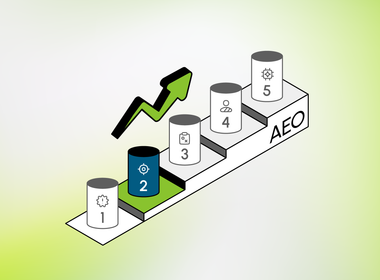
What Is Stage 2 of the AEO Maturity Matrix? A Guide to Operational AEO
Stage 2 of the AEO Maturity Matrix, Operational AEO, is where AEO starts becoming an organized, ongoing program rather than a series of reactive efforts. SEO and content teams have clearer ownership, shared processes and tools, and consistent AI visibility tracking. But AEO is still largely concentrated within those core teams, and performance isn't connected to broader business priorities yet.
To move from Operational to Strategic AEO:
- Establish cross-functional ownership and executive sponsorship. Use AI visibility, competitive, and performance data to build support beyond SEO and content.
- Use AI search insights to set content priorities. Turn visibility gaps, competitive intelligence, and audience behavior into a consistent process for deciding what to optimize next.
- Connect AI visibility metrics to traffic, conversions, and revenue. Define what AEO success means for your organization and connect visibility to the business outcomes that matter.
- Integrate AEO intelligence into your marketing technology. Bring AEO data into the tools and workflows your teams already use to reduce manual work and create a stronger foundation for scale.
AEO programs don’t mature all at once. They develop as teams move from reacting to individual changes in AI search to building the people, processes, measurement, and technology needed to manage AEO at scale. The AEO Maturity Matrix maps that progression across five stages.
In Stage 1: Reactive AEO, your efforts are often fragmented. Teams respond to visibility changes as they happen, ownership is unclear, and there’s little consistent measurement of AI search performance.
Stage 2: Operational AEO marks meaningful progress. SEO and content teams have started bringing structure to their AEO efforts, with clearer ownership, repeatable processes, dedicated technology, and consistent AI visibility tracking.
But becoming more organized doesn’t automatically make an AEO program strategic. At the Operational stage, efforts are still largely concentrated within SEO and content. Insights may improve day-to-day execution without influencing broader marketing priorities, and visibility metrics aren’t consistently tied to business outcomes just yet.
That’s the challenge of Stage 2: taking the foundation you’ve built and expanding its impact. In this guide, we’ll break down what Operational AEO looks like, where teams tend to get stuck, and what needs to change to reach Stage 3.
Stage 2 of the Maturity Matrix: Operational AEO
Stage 2 is where an AEO program becomes Operational. Instead of responding to AI search changes one at a time, teams start centralizing how the work gets done. Ownership becomes clearer, processes become more repeatable, and dedicated technology gives SEO and content teams a consistent view of AI visibility.
The primary objective at this stage is to centralize and organize AEO efforts. Teams are building shared ways of working and using AI search data more consistently to understand performance, identify opportunities, coordinate their response, and measure what happens next.
Most organizations are still in the Reactive or Operational stages, which means moving beyond Stage 2 creates an opportunity to get ahead of competitors as AI search becomes a more important part of marketing strategy.
So, what does an Operational AEO program actually look like? Let’s break it down across the four pillars of AEO maturity: people, process, metrics, and tooling.
What Stage 2 looks like across the four pillars
Stage 2 marks the shift from reactive AEO toward a more organized approach. The foundations are taking shape, but maturity isn’t a straight line.
Looking across people, process, metrics, and tooling shows where Operational teams have made progress and what their AEO programs look like today.
People
At the Operational stage, an AEO program has clearer ownership within SEO and content. Teams understand who is responsible for monitoring AI visibility, identifying opportunities, prioritizing optimizations, and coordinating the work needed to act on them.
AEO is no longer something one person manages on the side. Instead, SEO and content teams build their knowledge together, establish consistent ways of working, and share responsibility for AI search performance.
Example: An SEO lead reviews AI visibility and identifies topics where the brand is losing ground to competitors. They bring those opportunities into a recurring planning session with content, where the teams agree on priorities, assign owners, and determine which pages need to be created or optimized.
Process
Operational teams start replacing one-off tasks with repeatable workflows. SEO and content work together more consistently to identify AEO opportunities, determine which ones matter most, and execute on them.
AEO also becomes part of ongoing planning rather than something teams address only when a visibility problem appears. Teams establish a defined path from identifying an opportunity to prioritizing it, taking action, and measuring the result.
Example: During monthly planning, SEO and content review AI visibility and competitor performance alongside existing search data. They identify a category where competitors are earning more citations, prioritize the most important content gaps, and add the corresponding updates and new content to their shared roadmap.
Metrics
One of the biggest differences from Stage 1 is that AI visibility tracking is now established.
Teams consistently measure citations, mentions, and AI Market Share across a defined set of prompts instead of relying on individual searches to understand performance.
AI and traditional search performance are starting to be viewed and reported on together. This gives teams a baseline for tracking changes over time, comparing performance against competitors, and evaluating whether their AEO efforts are improving visibility.
Example: A team monitors citations and AI Market Share alongside organic rankings and traffic. With those metrics in one view, it can track how the brand’s overall search presence changes as the team creates and optimizes content.
Tooling
Dedicated AEO technology starts replacing the manual checks, spreadsheets, and disconnected tools that characterize a Reactive AEO program. Teams have centralized AI visibility, traditional search, content, and technical data, giving SEO and content a shared intelligence foundation.
That technology also helps teams move more efficiently from insight to action. They can identify visibility gaps, understand which content needs attention, monitor whether AI crawlersCrawlers
A crawler is a program used by search engines to collect data from the internet.
Learn More can access priority pages, and measure performance without having to piece together the entire picture manually.
Example: An AEO platform like Conductor brings AI visibility, competitive performance, content opportunities, and AI crawler activity into one place. This replaces manual prompt tracking with a more consistent way to monitor performance and identify where to take action.
Common challenges in the Operational AEO stage
Once a program is Operational, AEO has owners, established processes, consistent measurement, and dedicated technology. But those improvements can only take the program so far when AEO is still largely managed within SEO and content.
Challenge #1: AEO remains concentrated within SEO and content
SEO and content may own much of the day-to-day AEO work, but they don't control every factor that influences AI visibility. Technical accessibility, brand positioning, third-party authority, and measurement depend on teams like Web Development, Brand, PR, and Analytics.
For example, an SEO lead might uncover a technical issue preventing AI crawlers from accessing important content, but getting it fixed requires the Web team to understand why the issue matters and prioritize it alongside their other work.
That same problem can make it difficult to build support at the leadership level. If AEO priorities aren't connected to the goals other teams and executives already care about, securing broader investment will be an uphill battle.
Challenge #2: Repeatable doesn’t mean strategic yet
Stage 2 teams have processes for finding and acting on AEO opportunities, but those processes are often focused on improving day-to-day execution. Teams identify a visibility gap, prioritize an optimization, and measure what happens next.
What's missing is a stronger connection between those insights and broader planning. AI search data can tell you more than which page to optimize next. It can reveal topics where competitors are gaining authority, audiences you're failing to reach, or areas where your brand isn't part of the conversation.
Until those insights regularly inform wider content and marketing priorities, AEO remains something teams execute rather than something that helps shape strategy.
Challenge #3: AI visibility data requires context
Consistently tracking citations, mentions, sentiment, and AI Market Share gives Operational teams much more visibility into performance. But knowing that a metric moved doesn't necessarily tell you why, or whether or not it mattered.
Not every citation, prompt, or visibility gain has equal value. Teams need to focus on the topics, audiences, and competitive areas that matter to the business, then understand whether stronger AI visibility contributes to engagement, conversions, revenue, or other meaningful outcomes.
Without that context, teams can end up with more AEO data but little guidance on how to adjust their investments and strategy.
Challenge #4: Technology is centralized, but not fully integrated
Stage 2 gives SEO and content a more centralized technology foundation, but AEO intelligence can still sit apart from the systems other teams use to plan, analyze, and execute.
That creates friction as the program expands. Analytics may need an export to incorporate AI visibility into its reporting. Marketing may depend on SEO to surface relevant AEO insights. Teams can spend time manually combining data or transferring information between systems before anyone can act on it.
It also makes broader buy-in harder. When stakeholders can't easily access AEO data or understand it in the context of the metrics and workflows they already use, they're less likely to incorporate it into their budgeting decisions.
Challenge #5: Business impact
Operational teams can measure whether their AEO efforts are improving AI visibility, but connecting those improvements to business impact is often harder. More citations, mentions, or market share can show that the work is paying off in AI search. But they don’t necessarily show what that increased visibility means for the business.
Without a clear connection to traffic, conversions, revenue, or other business outcomes, it’s difficult to provide ROI or make the case for greater AEO investment. Closing that gap is crucial to moving from an Operational program to a Strategic one.
How to move from Operational to Strategic AEO: Actionable strategies
The challenges of Stage 2 share a common theme: AEO has become more organized, but its impact is still largely contained within the teams managing it. Reaching Stage 3 means turning that operational foundation into a Strategic AEO program that influences decisions across the organization.
That requires more than adding stakeholders or tracking more metrics. Teams need to show why AEO matters to the business, use AI search intelligence to guide broader priorities, and connect the data and technology that power AEO to the teams that can act on it.
Here are four ways to make that shift:
1. Establish cross-functional ownership and executive sponsorship
Start by using the AI visibility, competitive, and performance data you're already collecting to show teams outside SEO and content why AEO matters to the priorities they own. The goal is to give stakeholders a reason to participate.
Make that connection specific to each team:
- Web Development: Show which technical issues or AI crawler behavior could be affecting visibility.
- Analytics: Connect AI visibility and referral data to traffic, conversions, and other business outcomes.
- Brand and PR: Share citation and sentiment insights that show how AI engines describe your brand and which external sources are shaping those answers.
- Marketing: Surface audience, topic, and competitive gaps that can inform campaigns and content priorities.
Once stakeholders see where AEO intersects with their work, define how each team contributes to shared goals and who owns execution. Use early performance gains and business impact to build executive support and make the case for greater investment.
2. Use AI search insights to set content priorities
At the Operational stage, you're already collecting AI visibility data. Now, make those insights a regular input into content planning by reviewing them alongside competitor performance, audience behavior, and traditional search data.
Focus on the opportunities with the greatest potential impact. That could mean a priority topic where competitors earn more citations, an important audience with weak visibility, or a content gap at a key stage of the customer journey.
Before deciding what to optimize, confirm that AI crawlers can access and understand your content. A technical issue can limit visibility regardless of how strong the content itself is.
Bring those opportunities into your existing content workflow, assign owners, and measure the results so each cycle informs the next.
Conductor connects this process across Intelligence, Monitoring, and Creator: Intelligence identifies visibility gaps and competitive opportunities, Monitoring surfaces AI crawler and technical issues, and Creator helps teams create and optimize content based on those insights.
3. Connect AI visibility metrics to traffic, conversions, and revenue
Tracking AI visibility tells you whether your brand is showing up. To make AEO strategic, you also need to understand whether that visibility is contributing to outcomes the business cares about.
Start by defining what success looks like for your organization. Then connect AEO metrics to the KPIs your teams and leadership already use:
- Segment AI visibility by persona, intent, topic, or other meaningful dimensions to see where you're reaching the right audiences and where gaps remain.
- Connect visibility to downstream behavior such as referral traffic, engagement, conversions, and revenue.
- Bring AEO and traditional search performance together to build a more complete picture of your visibility and its impact on business results.
Use those insights to decide where additional investment is most likely to have an impact and demonstrate AEO's value beyond search visibility alone.
Conductor Intelligence brings AI Search Performance, AI Market Share, competitive benchmarking, and traditional organic performance together, while reporting and analytics integrations help connect that data with broader marketing and business outcomes.
Ready to take the next step? The Enterprise AEO Handbook provides a practical framework for building AEO into your organization, from establishing cross-functional ownership to creating the processes needed to scale.
4. Integrate AEO intelligence into your marketing technology
As more teams use AEO insights, manually moving data between systems becomes harder to sustain. Start by identifying the workflows creating the most friction. Look for places where teams regularly export AEO data, combine reports, duplicate analysis, or pass insights between tools before they can take action.
From there, prioritize the connections that make AEO intelligence available where teams already work. Analytics might need AI visibility data within reporting tools like Adobe Analytics or Google Analytics. Content or marketing teams may benefit from accessing AEO insights within planning and execution tools like their CMS.
The goal is to reduce the handoffs that keep useful intelligence siloed—not to grow your tech stack.
This also creates the foundation for more advanced AEO workflows as your program matures. Conductor Data API can bring search and AEO intelligence into existing analytics, reporting, content, and enterprise applications, while the Conductor MCP Server connects that intelligence directly to AI tools and applications.
At this stage, the focus is on making trusted AEO data accessible across your tech stack. More advanced agentic workflows can build on those connections later.
How to know your organization is ready for Strategic AEO
Moving from an Operational to a Strategic AEO program means expanding beyond the teams responsible for day-to-day execution. AEO should start influencing broader decisions, with more stakeholders involved and a stronger connection between AI visibility and business impact.
Use these questions to assess whether your organization is ready:
- Does AEO have active involvement from teams beyond SEO and content?
- Do you have executive sponsorship for your AEO program?
- Are AI search insights used to inform broader content and marketing priorities?
- Do teams use AI visibility and competitive data to prioritize where to invest?
- Are AI visibility metrics connected to traffic, conversions, or other business outcomes?
- Can you demonstrate how AEO contributes to broader marketing goals?
- Is your AEO platform connected with other tools and data your marketing teams rely on?
- Are AEO insights regularly shared with stakeholders outside the teams responsible for day-to-day execution?
If you can answer yes to each of these questions, you have the foundation for Stage 3: Strategic AEO, where AI search becomes a broader organizational priority and starts influencing decisions across teams.
Visibility alone doesn't tell you whether your AEO strategy is working. The Definitive AEO Playbook shows you how to define meaningful AI search outcomes, measure the right signals, and turn visibility data into decisions your business can act on.
FAQs about Operational AEO
Operational AEO is Stage 2 of the AEO Maturity Matrix. At this stage, organizations have moved beyond reactive, one-off efforts and started managing AEO as an ongoing program. SEO and content teams have clearer ownership, shared processes, dedicated technology, and consistent AI visibility tracking.
Operational AEO means your organization has established the basic structure needed to manage AEO consistently. Teams have defined ways to identify opportunities, prioritize work, track metrics like citations, mentions, and AI Market Share, and measure changes over time.
Reactive AEO is largely ad hoc. Ownership is unclear, processes are inconsistent, and teams have little or no systematic AI visibility tracking.
Operational AEO introduces structure. SEO and content teams establish ownership, repeatable workflows, dedicated AEO technology, and consistent measurement. That allows them to manage AI search performance proactively rather than responding to individual changes as they occur.
Operational AEO (Stage 2) is primarily organized around SEO and content, with established workflows and AI visibility tracking.
Strategic AEO (Stage 3) expands AEO beyond those core teams, connecting AI search insights to broader marketing priorities, business outcomes, and cross-functional decision-making.
You’re likely at the Operational stage if SEO and content have established AEO ownership, use shared processes and technology, and consistently track AI visibility metrics. However, AEO may still have limited involvement outside those teams, and performance isn't yet consistently connected to broader business outcomes.
Moving from Operational to Strategic AEO requires expanding the program beyond day-to-day SEO and content execution. Focus on four areas:
- Establish cross-functional ownership and executive sponsorship.
- Use AI search insights to set broader content priorities.
- Connect AI visibility to traffic, conversions, and revenue.
- Integrate AEO intelligence into the technology and workflows teams already use.
Prioritize strengthening the foundation you've already built rather than simply doing more AEO work. Focus on bringing relevant stakeholders into the program, using AI search data to guide decisions, connecting visibility to business impact, and making AEO intelligence accessible across your organization.
Moving beyond Operational AEO
Reaching Stage 2 means you’ve established the ownership, processes, measurement, and technology needed to manage it consistently. That foundation makes it easier to spot opportunities, act on them, and understand whether your efforts are improving AI visibility over time.
The next opportunity is to extend that impact beyond the teams doing the day-to-day work. This is the shift from Operational to Strategic AEO.
By Stage 3, AI search insights are informing decisions beyond SEO and content. More teams understand how their work contributes to AI visibility, and performance is connected to the business outcomes leadership cares about. AEO becomes part of how the organization plans and prioritizes, not just how search teams execute.
And there’s an advantage to making that shift now. Most organizations are still in the Reactive or Operational stages of the AEO Maturity Matrix. Reaching Stage 3 puts you ahead of much of the market while other teams are still working to operationalize the basics.
The work at Stage 2 makes that possible. The next step is making sure the value of AEO doesn’t stop with SEO and content.