
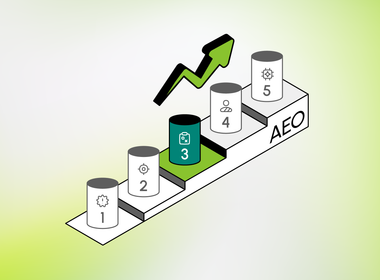
What Is Stage 3 of the AEO Maturity Matrix? A Guide to Strategic AEO
Stage 3 of the AEO Maturity Matrix is Strategic AEO. AEO is no longer owned primarily by SEO and content. Teams across the organization are using AI search insights to inform their work, leadership is invested in the program, and AI visibility is being connected to broader marketing and business outcomes.
Getting here is a major step forward. The challenge now is scaling what works without adding more manual coordination as more teams, workflows, and decisions become part of your AEO strategy.
To move from Strategic to Authority-First AEO:
- Make AEO accountable across customer-facing teams.
- Build AI search into brand and business decisions.
- Measure AEO performance across the customer journey.
- Automate AEO intelligence across your tech stack.
Together, these steps make AEO easier to execute across the organization while building on the strategic foundation you already have.
By the time AEO becomes a strategic priority, the question is no longer how to get a program off the ground. It’s how to make a successful program work across more teams, more decisions, and more of the business.
That’s the challenge at Stage 3 of the AEO Maturity Matrix. The foundations built in earlier stages are already in place. AEO has expanded beyond SEO and content, executive support is established, and AI search insights are influencing broader marketing priorities and business decisions.
But a stronger strategy also creates more complexity. More teams need access to the right intelligence. Decisions depend on consistent measurement. And workflows that were manageable with a smaller group can start to slow execution as the program expands.
Strategic AEO is about navigating that transition. In this guide, we’ll look at what Stage 3 looks like across the four pillars of AEO maturity, where strategic programs tend to get stuck, and how to build toward Stage 4: Authority-First AEO.
Stage 3 of the AEO Maturity Matrix: Strategic AEO
You’ve built the foundation in Stage 1 and Stage 2. Now AEO is starting to influence how the wider organization works.
That’s the shift at Stage 3. AI search insights aren’t staying within SEO and content anymore. They’re helping brand teams understand how AI engines talk about the company, showing PR which outside sources are shaping those answers, and giving product and web teams a clearer view of the information AI engines rely on.
Leadership is part of the picture, too. Executive sponsorship is established, and the conversation has moved beyond citations and mentions alone. Teams are beginning to connect AI visibility to traffic, conversions, revenue, and the broader outcomes that show what AEO is contributing to the business.
This is Strategic AEO: AEO has moved from a set of coordinated activities to a cross-functional strategy that influences planning and decision-making across the organization.
Getting to Stage 3 already puts you ahead of much of the market. The opportunity now is to make that advantage last by building AEO deeply enough into the business that it can keep working as the program grows.
What Stage 3 looks like across the four AEO maturity pillars
Strategic AEO changes how people across the organization contribute to AI search. Ownership is broader, insights travel further, and AEO performance is connected more closely to the decisions and outcomes that matter across the business.
Here’s what that looks like across each pillar:
People
AEO is now a cross-functional effort. SEO and content teams still bring much of the expertise, but brand, PR, product, web development, and other teams have a clearer role in improving how the company shows up in AI search.
Executive sponsorship is also established, giving teams the support to bring AEO into larger initiatives and priorities. The expertise may still be concentrated among a smaller group of practitioners, but responsibility for the outcomes is beginning to spread.
Example: AI answers consistently position a competitor as the leader in a priority product category. PR investigates the third-party sources reinforcing that perception, while brand and content teams work to strengthen the company’s own product narrative. The AEO team provides the intelligence, but each function owns its response.
Process
AEO insights are becoming part of broader marketing and content planning rather than living in a separate search workflow. Teams work toward shared priorities, with clearer governance around how opportunities are identified, assigned, and measured.
As more functions get involved, however, much of that coordination still depends on people. Research, recommendations, approvals, execution, and reporting often move through manual handoffs between teams.
Example: Before approving the next quarter’s editorial calendar, the content team reviews the prompts where competitors are cited, but the brand isn’t. High-value gaps are added to planned campaigns and content briefs, while opportunities that require stronger third-party authority are routed to PR instead of automatically becoming new content assignments.
Metrics
Measurement has moved beyond tracking AI mentions and citations on their own. Strategic teams connect AI visibility to traffic, conversions, revenue, and other business outcomes while evaluating AI and traditional search performance together.
They’re also starting to look at performance with more context: which audiences they’re reaching, where visibility is strongest across the customer journey, and how they compare with competitors. Getting that level of detail often still requires significant manual analysis.
Example: AEO reporting shows that the brand appears in 60% of awareness-stage prompts but only 20% of purchase-stage prompts for a priority audience. When those results are compared with AI referral traffic and conversions, the team can see whether improving purchase-stage visibility should take priority over growing its overall mention count.
Tooling
AEO technology is increasingly connected to the rest of the marketing stack. AI search intelligence can flow into analytics, content, and reporting systems, giving more teams access to the data they need without relying on separate tools and workflows.
Technical monitoring adds another important layer by showing whether AI crawlersCrawlers
A crawler is a program used by search engines to collect data from the internet.
Learn More can access and understand priority content. While these connections make the program more integrated, people are still doing much of the work to interpret insights, coordinate the response, and put recommendations into action.
Example: Conductor Monitoring alerts the web team when AI crawlers can no longer access pricing content after a site release and identifies the affected pages. The AEO team then uses Conductor Intelligence to track whether citations recover once the issue is fixed. No one has to wait for the next crawl, export a spreadsheet, or manually connect the technical issue to the visibility change.
Common challenges in the Strategic stage
Reaching Strategic AEO solves many of the problems that hold earlier-stage programs back. You have executive support, more teams are involved, and AEO is influencing decisions beyond search and content.
That said, expanding the program introduces a different kind of complexity.
The challenge at Stage 3 isn’t getting people to care about AEO. It’s making sure the way you work can keep up with how quickly the program is growing.
Challenge #1: More teams mean more coordination
Cross-functional ownership gives AEO more influence, but it also makes execution harder to manage. An opportunity that once required coordination between SEO and content might now involve brand, PR, product marketing, web development, analytics, and other teams, each with its own priorities and timelines.
Without stronger governance, it becomes harder to decide who should act, when they should get involved, and which team ultimately owns the outcome. The result can be plenty of alignment around the strategy, but slower execution when several functions need to move together.
Challenge #2: Insight can outpace execution
Strategic teams are often good at finding opportunities. Acting on all of them is another matter.
Research might uncover a citation gap that requires new content, stronger third-party authority, and changes to an existing product experience. Turning that insight into action can mean separate briefs, tickets, approvals, and handoffs across multiple teams. As the volume of opportunities grows, the manual work between identifying a priority and actually addressing it becomes a bottleneck.
Challenge #3: Proving impact gets more complex
Connecting AEO to business performance is a major step forward at Stage 3, but the analysis behind it can become increasingly demanding. Understanding whether stronger visibility with a particular persona or at a specific intent stage translates into traffic, conversions, or revenue often means bringing together AI search, web analytics, CRM, and other business data.
That makes reporting more valuable, but also more resource-intensive. If teams are still manually combining and analyzing that data, answering deeper questions about AEO’s impact can take significant time every time leadership asks for a new view.
Challenge #4: Connected tools still depend on people
Integrating AEO technology with the broader marketing stack removes some of the fragmentation of earlier stages. It doesn’t necessarily remove the manual work.
Human oversight is still crucial, especially when decisions affect your brand, content, or customer experience. The problem is when human involvement becomes a requirement at every step, creating unnecessary handoffs that slow teams down.
A visibility alert might surface automatically, while someone still has to investigate what changed, determine which team should respond, share the relevant context, and follow up on the outcome. Multiply those steps across more products, markets, and business units, and the limits of manual execution become much more noticeable.
How to move from Strategic to Authority-first AEO: Actionable strategies
Strategic AEO gives you the right teams, data, and executive support. Reaching Stage 4: Authority-First AEO means making those capabilities work across the organization without adding more manual coordination every time the program expands.
The goal is to move from cross-functional participation to company-wide adoption of AI search intelligence. That requires clearer accountability, AEO data built into everyday business decisions, deeper measurement across the customer journey, and automation that gets the right intelligence to the right teams faster.
Here are four ways to make that shift:
1. Make AEO accountable across customer-facing teams
Cross-functional participation is already a hallmark of Strategic AEO. The next step is moving from participation to accountability.
Start by identifying which customer-facing teams have the greatest influence over how your brand is represented in AI search. Then turn that influence into clear ownership:
- Define the AEO outcomes each function can influence, from brand representation and third-party authority to content quality and digital experience.
- Set goals and owners for those outcomes so teams know what they’re responsible for improving.
- Give teams access to the data and expertise they need to act without waiting for the central AEO team to interpret every insight or coordinate every next step.
- Bring those goals into existing planning and reporting so AEO accountability becomes part of how teams already work.
This doesn’t mean decentralizing every AEO decision. High-risk work like site migrations, large-scale technical changes, or major optimization initiatives should still involve SEO or AEO experts. The goal is to distribute ownership without losing the expertise and oversight that protect performance.
In Conductor, you can build Workspaces around the priorities different teams are accountable for, giving them a focused view of the topics, pages, competitors, and performance data that matter to their work. Teams can then use Conductor Intelligence to spot opportunities and measure progress independently, while the central AEO team maintains a shared view of performance across the program.
2. Build AI search into brand and business decisions
The biggest shift here is when AEO intelligence enters the conversation. If teams only review AI search performance after a campaign launches, messaging is approved, or a quarterly plan is locked, the data can explain what happened—but it can’t influence the decision itself.
Identify the recurring decisions where AI search should have a seat at the table. For example, before teams finalize a product launch, review which brands AI engines recommend for the questions your target buyers are asking. During brand planning, compare your intended positioning with how AI engines actually describe your company. When PR sets priorities, look at which third-party sources are shaping citations and recommendations.
Then make the process repeatable. For each decision, define:
- Which AEO signals matter: This might include citation share, sentiment, competitor visibility, persona-level gaps, or AI crawler activity.
- When those signals should be reviewed: Build the review into an existing planning milestone instead of creating another AEO meeting.
- What requires action: Set thresholds for meaningful changes so teams aren’t reacting to every fluctuation.
- Who owns the response: A sentiment issue, citation loss, and crawlability problem should not all land with the same team.
Conductor’s AI Search Performance helps teams evaluate mentions, citations, sentiment, and visibility by persona and intent stage. AI Market Share adds the competitive view, while Conductor Monitoring helps rule out crawler or technical issues before teams invest in changing content or messaging. Together, those signals give teams enough context to make AEO part of the decision, not simply another metric in the recap.
3. Measure AEO performance across the customer journey
Organizations with a Strategic AEO program already connect AI visibility to business performance. To move closer to Authority-First AEO, go deeper than an aggregate visibility score and measure where AI search is influencing the customer journey.
Start by mapping the prompts you track to the personas and intent stages that matter most to your business. Then segment citations, mentions, sentiment, and competitive visibility across those groups. A 10% increase in overall visibility means very little if most of the growth comes from low-priority awareness questions while competitors are gaining ground with buyers closer to a decision.
Next, connect those segments to downstream performance wherever the data allows. That might reveal that strong visibility among practitioners drives significant AI referral traffic, while weak visibility among executive buyers lines up with lower conversionConversion
Conversions are processes in online marketing that lead to a defined conclusion.
Learn More volume.
The point isn’t to force perfect attribution. It’s to identify which visibility gains and gaps deserve investment.
Reporting should also change based on who is using it. Executives need business impact and competitive trends. Brand or PR teams may need sentiment and citation patterns. AEO practitioners need the specific prompts, pages, and audience gaps behind those movements.
Conductor Intelligence brings AI Search Performance, competitive benchmarking, and traditional search performance into that analysis. Persona- and intent-level reporting helps teams see where visibility changes across the journey, while analytics integrations connect those patterns to traffic, conversions, and other downstream outcomes.
4. Automate AEO intelligence across your tech stack
By Stage 3, your AEO platform is already connected to analytics, content, reporting, and other enterprise systems. The next question is whether those connections are actually removing work.
Not sure where to look first? Audit the recurring tasks that still require someone to collect data, build a report, spot a change, send an update, or route an insight to another team. Prioritize workflows that are high-volume and predictable, especially where the next step can be defined without removing human judgment.
A practical place to start could include automatically routing a meaningful technical alert to the web team, pushing updated AEO performance into an executive dashboard, or surfacing a significant competitive visibility change inside the AI tools a marketing team already uses.
Remember: Human oversight isn’t going anywhere. What you’re removing is the manual work required to get the signal in front of the person who needs it.
Use Real-time Alerts and defined routing rules in Conductor Monitoring, so meaningful changes don’t wait for the next reporting cycle. Then measure whether the automation actually saves time or shortens the path from insight to action before expanding it to more workflows.
Within Conductor Intelligence, Conductor Data API can feed trusted AEO intelligence into existing analytics and reporting systems, while the MCP Server and Native LLM Apps make that intelligence accessible inside AI applications and workflows.
At this stage, the focus is on automating how intelligence moves and gets used. More autonomous agentic execution comes later in the maturity journey.
How to know your organization is ready for Authority-First AEO
Moving from Strategic to Stage 4: Authority-First AEO means AEO is no longer dependent on a small group of experts to keep the program moving. Teams across the organization have the ownership, intelligence, and workflows to act on AI search opportunities within their areas of expertise.
Use these questions to assess whether you’re ready to advance:
- Do customer-facing teams have clearly defined AEO goals, responsibilities, and owners?
- Can teams outside SEO and content use AEO intelligence to make decisions without relying on the central AEO team for every insight?
- Do AI search insights regularly inform brand, PR, product, content, and broader business decisions?
- Have you defined when changes in visibility, citations, or sentiment require action and who is responsible for responding?
- Can you measure AEO performance across priority personas, intent stages, products, and markets?
- Can you connect AI visibility and competitive performance to traffic, conversions, revenue, or other meaningful business outcomes?
- Do relevant insights and alerts reach the teams responsible for acting on them without relying on manual reports or handoffs?
- Have you automated recurring analysis, reporting, alerts, or other repeatable AEO workflows while maintaining human oversight?
If you can confidently check each of these boxes, your organization has built the foundation for Authority-First AEO, where AEO is embedded across the business, and teams are equipped to strengthen your brand’s authority at scale.
If this checklist surfaced gaps in how your organization executes AEO, The Definitive AEO Playbook can help you address them. Get practical guidance for prioritizing opportunities, coordinating teams, and measuring impact.
FAQs about Strategic AEO
Strategic AEO is Stage 3 of the AEO Maturity Matrix. At this stage, AEO has expanded beyond SEO and content into a cross-functional program with executive support. AI search insights inform broader marketing and business decisions, and performance is increasingly connected to outcomes like traffic, conversions, and revenue.
Strategic AEO means AI search is no longer treated as a separate channel or isolated marketing initiative. Teams across the organization use AEO intelligence to guide their work, with shared priorities, clearer ownership, and leadership visibility into how AI search affects the business.
Operational AEO (Stage 2) focuses on making AEO consistent within the teams doing the work. Strategic AEO (Stage 3) expands that foundation across the organization. Executive sponsorship is established, teams like brand, PR, product, and web development play an active role, and AI search intelligence begins shaping decisions beyond day-to-day search and content execution.
Strategic AEO (Stage 3) is cross-functional, but execution can still depend on manual coordination and a central group of AEO experts. Authority-First AEO (Stage 4) distributes accountability more broadly, embeds AI search intelligence into more business workflows, and uses automation to reduce the manual work required to turn insights into action.
You’re likely at the Strategic stage if AEO has executive sponsorship, teams beyond SEO and content actively participate, and AI search insights regularly influence broader marketing decisions. You should also be connecting AI visibility to business outcomes and integrating AEO technology with other systems in your marketing stack.
Focus on making the AEO capabilities you’ve built easier to scale. The priorities are:
- Make AEO accountable across customer-facing teams. Give teams clear ownership of the AEO outcomes they can influence and the intelligence they need to act.
- Build AI search into brand and business decisions. Bring AEO insights into existing planning cycles so they influence priorities before decisions are made.
- Measure AEO performance across the customer journey. Look beyond overall visibility to understand performance by audience, intent, and downstream business impact.
- Automate AEO intelligence across your tech stack. Reduce repetitive analysis, reporting, and handoffs while maintaining human oversight for decisions that require judgment.
Prioritize the areas where manual coordination is limiting an otherwise strong AEO program. That means distributing accountability beyond the central AEO team, making AI search intelligence part of existing planning processes, improving measurement by audience and intent, and automating how insights and alerts reach the teams responsible for acting on them.
Turn your AEO strategy into authority
A strong AEO strategy can take you far. But there’s a point where adding more teams, markets, and opportunities creates more work than a manually coordinated program can handle.
Authority-First AEO is about breaking through that ceiling. Instead of relying on a small group to keep AEO moving, ownership spreads across the organization. Teams have the intelligence to make better decisions in their own areas, while automation helps insights reach the right people faster.
That changes what your AEO team can accomplish. Rather than spending its time pulling reports, routing opportunities, and following up across functions, it can focus on the bigger questions: where your brand needs to build authority, where competitors are gaining ground, and which opportunities deserve investment.
The goal isn’t simply to handle more AEO work. It’s to build an organization capable of acting on more opportunities without adding the same amount of manual effort.
That’s where strategy starts becoming authority, and where the advantage you’ve built can continue to grow as AI search does.