
What Is Stage 4 of the AEO Maturity Matrix? A Guide to Authority-first AEO
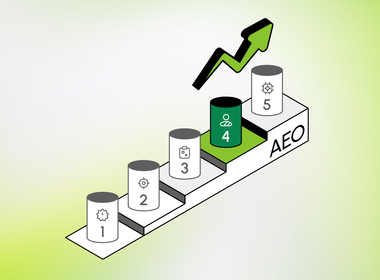
Stage 4 of the AEO Maturity Matrix is Authority-first AEO. By this point, AEO is embedded across the business. Teams are using shared AI search intelligence to strengthen how your brand is understood, cited, and recommended, with automation helping them respond to changes and opportunities faster.
But there’s still a limit to how far automation alone can take you. People are often the ones interpreting signals, deciding what happens next, and carrying out the work. As your AEO program grows, those steps become harder to manage at the speed and scale AI discovery demands.
To move from Authority-first AEO to Transformative AEO (Stage 5):
- Redefine AEO roles around strategy, oversight, and expertise.
- Turn repeatable AEO workflows into agentic workflows.
- Use continuous AEO signals to prioritize what agents act on.
- Build governance for agentic AEO execution.
The goal is to let agents take on more of the routine work while your experts stay focused on strategy, governance, and decisions that require human judgment.
Getting AEO embedded across an organization is a major accomplishment. Keeping all those teams, workflows, and decisions aligned as the program grows is a different challenge.
That’s where Stage 4 of the AEO Maturity Matrix comes in. By the time an organization reaches Authority-first AEO, building authority within AI surfaces is no longer primarily the responsibility of AEO, SEO, and content teams. Brand, PR, product, web, and other customer-facing teams all have a role in shaping how the company is understood and represented by AI.
The infrastructure supporting that work has matured, too. Teams can measure AI visibility across the audiences, intent stages, products, and markets that matter to the business. Connected technology makes that intelligence available across existing workflows, while monitoring and automation help surface important changes faster.
The opportunity now is to build on that foundation without simply adding more people and manual work as AEO becomes more sophisticated.
In this guide, we’ll look at what Authority-first AEO looks like across the four pillars of maturity. Plus, where even advanced programs can run into limitations, and how to prepare for the shift to Stage 5: Transformative AEO.
Stage 4 of the Maturity Matrix: Authority-first AEO
At Stage 4, AEO has become part of how the organization builds and protects its authority in AI search. It’s no longer a program that a handful of teams contribute to. Customer-facing functions understand their role, and AI search intelligence is built into the decisions and workflows that shape how your brand shows up.
That changes what authority looks like in practice. AI engines form their understanding of your brand from both your own content and the third-party sources they trust. Building authority means strengthening those signals so your brand earns meaningful citations and recommendations.
Reaching Authority-first AEO also means the foundation powering the program is much more sophisticated. Teams work from shared intelligence and measure performance across the customer journey. Automation helps surface important changes and opportunities without waiting for the next report or analysis.
This puts Stage 4 organizations among the most advanced AEO adopters.
What Stage 4 looks like across the four pillars
Authority-first AEO changes how the entire organization contributes to AI discovery. Teams have greater ownership within their areas of expertise, while shared intelligence keeps everyone working toward the same goals.
Authority also extends beyond the content your brand owns. Third-party sources are particularly helpful in shaping how AI engines understand, cite, and recommend your brand. Understanding those external signals is instrumental to building and protecting your presence in AI search.
Here’s what that looks like across each pillar:
People
AEO ownership extends across the enterprise. Customer-facing teams understand how their work influences AI search authority and take responsibility for the outcomes within their control.
That distributed ownership is backed by sustained executive support. Central AEO leaders can focus more of their attention on strategy and governance, while functional teams apply their expertise to execution.
AEO expertise has also spread beyond a centralized group of specialists. Unified data keeps teams working from the same source of truth, while customizable reporting gives each function the insights most relevant to its work.
Example: The brand team notices that AI engines are increasingly associating the company with an outdated product position. Instead of routing the issue entirely through the AEO team, they can investigate the underlying citations and adapt messaging accordingly on the relevant pages.
Your owned content is only one part of your AI search authority. The Definitive AEO Playbook explores how third-party sources influence AI answers and provides practical guidance for strengthening the signals that shape how your brand is represented.
Process
AEO is built into the workflows teams already use to plan and execute their work. AI search intelligence can inform a PR strategy, product launch, content plan, or website update without requiring a separate AEO process each time.
Automation also plays a larger role. Reporting and alerts surface meaningful changes directly to the teams responsible for them, reducing the coordination required to get an insight in front of the right people.
Governance keeps that distributed activity aligned. Shared standards help teams make decisions independently without creating inconsistencies in how the organization approaches AI search.
Example: A drop in citation share for a priority topic triggers an alert for the team responsible for that area. They can investigate the change within their existing workflow and determine whether it requires a response. The central AEO team only needs to step in when the issue crosses established thresholds or requires broader coordination.
Metrics
Stage 4 teams have a much richer view of AI search performance. They can evaluate citations, mentions, sentiment, and competitive visibility across the AI engines that matter to their business.
That performance is also viewed in context. Teams can see how visibility differs by audience, intent, product, market, or customer journey stage. Connecting those insights to downstream outcomes gives leadership a clearer picture of where AI search is contributing to the business.
The challenge is no longer a lack of data. As measurement becomes more granular, determining which changes deserve attention requires increasingly sophisticated analysis.
Example: An overall visibility score remains steady, but a closer look shows citation share falling among purchase-stage prompts in a priority market. Because the team can connect that change to audience and business context, they can recognize the decline as more important than the topline number suggests.
Tooling
At the Authority-first stage, a unified AEO platform serves as the shared intelligence layer for the program. AI visibility, competitive insights, and audience data inform everything from enterprise reporting to content planning and creation. Teams work from the same intelligence, even when applied through different tools and workflows.
Continuous monitoring keeps those workflows connected to what’s happening across the site. Changes in AI crawler activity, technical health, and priority content surface alongside performance signals, giving teams more context as they decide where to focus.
As AEO expands across the organization, APIs and MCP connections extend that intelligence into the wider technology ecosystem. Automation handles more of the recurring collection, reporting, alerting, and distribution behind the program. That allows relevant AEO intelligence to reach teams through the systems they already use, without requiring the central AEO team to manually connect and distribute every insight.
Example: Conductor Intelligence identifies high-value prompts where citation share is declining and pinpoints the pages tied to those topics. That data feeds directly into the team’s content workflow, alongside the competitive and audience insights needed to guide the refresh.
Once updates are published, Monitoring tracks the pages for changes in AI crawler access and technical health. Conductor’s MCP Server makes those performance and technical signals accessible within the tools teams use to evaluate results and plan their next move.
Common challenges in the Authority-first stage
Authority-first organizations have already solved many of the problems that slow down less mature AEO programs. But operating at this level creates new challenges.
There are more signals to interpret, more teams influencing AI search authority, and more opportunities to act on. Even with sophisticated technology in place, people can become the bottleneck between identifying what matters and acting on it.
Challenge #1: Enterprise-wide ownership requires stronger governance
Giving more teams ownership makes AEO easier to scale, but it also increases the number of people making decisions that can affect your AI search authority.
Shared standards become increasingly important as a result. Teams need enough freedom to act within their areas of expertise while staying aligned on brand representation, content quality, and broader AEO priorities.
Without that balance, central AEO leaders can end up spending more time reviewing work and keeping teams aligned than setting strategy.
Challenge #2: More data demands smarter prioritization
Continuous monitoring and more granular reporting give Authority-first teams a much clearer picture of AI search performance. But with more data comes more to analyze, and figuring out which changes actually deserve attention becomes increasingly difficult.
A shift in sentiment or a competitor gaining citation share could signal a meaningful change in performance. It could also be a normal fluctuation. When teams have to investigate every alert and dig through detailed reports to understand what matters, the volume of information can quickly become overwhelming.
This is where intelligent prioritization becomes critical. A platform like Conductor brings AEO performance data together with the context needed to identify high-impact issues and opportunities. As teams move toward more automated prioritization, they can spend less time sorting through signals and more time acting on the changes that matter most.
Challenge #3: Automation still stops short of action
By Stage 4, automation has removed much of the manual work involved in collecting data and distributing insights. The remaining gap often appears after an opportunity or issue has been identified.
Someone may still need to investigate what changed, determine the right response, create or update the necessary work, and move it through the appropriate approvals.
Human oversight remains essential, especially for decisions involving brand, messaging, or high-impact content. The limitation comes when expert involvement is required for routine steps that could happen safely without it.
As the AEO program grows, those small dependencies add up. The organization may have the intelligence to identify more opportunities than ever before, but its ability to act on them is still constrained by the amount of work people can personally analyze, coordinate, and execute.
How to move from Authority-First to Transformative AEO: Actionable strategies
Moving from Stage 4 to Stage 5 of the AEO Maturity Matrix means changing how the work behind your AEO program gets done.
You already have enterprise-wide ownership, sophisticated measurement, and technology connecting AI search intelligence across the business. Now you can build on that foundation by introducing more agentic ways of working.
The goal is to give agents more responsibility for the routine analysis and execution that still consumes expert time. People remain in control of strategy, standards, and high-impact decisions, with oversight built around the level of risk involved.
Here are four strategies to focus on:
1. Redefine AEO roles around strategy, oversight, and expertise
Start by looking at where your AEO experts are spending their time today. Even in an Authority-first organization, specialists may still be investigating recurring performance changes, preparing analysis, coordinating next steps, or completing predictable optimization work themselves.
Separate that work based on where human expertise actually adds value:
- Keep people focused on high-judgment work. Strategic decisions, brand-sensitive changes, and unfamiliar problems benefit from human expertise.
- Identify work agents can take on. Recurring analysis, reporting, opportunity identification, and other well-defined tasks are stronger candidates for delegation.
- Set human checkpoints based on risk. Define where agents can proceed independently and where recommendations or actions require review.
- Give experts ownership of the system. AEO specialists can set strategy, establish standards, evaluate performance, and improve the workflows agents operate within.
This shift also changes the skills an advanced AEO team needs. Experts need to know how to evaluate agent performance, refine the context and instructions agents work from, and recognize when a workflow needs more human involvement.
Conductor AgentStack offers teams multiple ways to integrate trusted AEO intelligence into their existing agentic workflows. LLM Apps make that intelligence available inside the AI tools teams already use, so experts can spend less time gathering context and more time applying their expertise.
As roles and workflows evolve, Conductor Professional Services and Customer Success can also help teams establish the processes and governance needed to support new ways of working.
2. Turn repeatable AEO workflows into agentic workflows
Once you’ve identified where agents can take on more responsibility, look at the workflows those tasks are part of. Many Authority-first teams already use automation to surface insights and move data between systems. The opportunity now is to reduce the predictable manual steps that still sit between identifying an opportunity and acting on it.
Start with workflows that happen frequently and follow a consistent pattern. The inputs, expected outcome, and approval requirements should all be clear enough that an agent can take on more of the process without introducing unnecessary risk.
Here are a few starting points:
- Content refreshes: An agent identifies pages losing AI visibility, analyzes what may be missing, and recommends or drafts updates for human review.
- Competitive gap analysis: An agent detects when a competitor gains citation share for priority prompts, analyzes the sources behind that change, and recommends the most relevant response.
- Recurring optimization opportunities: Agents can evaluate predefined performance signals and move routine opportunities forward without requiring an expert to manually investigate each one.
How much autonomy you give an agent should depend on the work. A routine, low-risk task may need only periodic review, while changes involving brand messaging or high-impact content should have a clear human checkpoint before execution.
Start small and measure what happens. Track the accuracy of agent recommendations, the time saved, and whether the resulting actions improve performance. Those results can help you decide which workflows are ready for greater autonomy and where human involvement still adds meaningful value.
The infrastructure behind these workflows matters because agents need access to the same trusted AEO intelligence your teams use to make decisions. Conductor AgentStack’s MCP Server and Data API bring that intelligence into custom agents and enterprise workflows. When the next step involves creating or updating content, Conductor Creator enables you to move content recommendations to execution.
Conductor’s AEO agents also support these repeatable workflows from insight to action, without requiring teams to build every workflow from scratch.
3. Use continuous AEO signals to prioritize what agents act on
Agentic workflows become much more valuable when agents know what deserves attention in the first place. Authority-first teams already have continuous monitoring and sophisticated measurement in place. The next step is turning those signals into clear triggers for analysis and action.
Start by defining the changes that should prompt a response. A single movement in visibility may not mean much on its own, so look at signals together and add the business context needed to understand their importance.
For example:
- Citation and mention changes: Flag meaningful gains or losses for priority prompts rather than reacting to every fluctuation.
- Competitive shifts: Prioritize changes where competitors gain ground with an important audience, intent stage, product, or market.
- Sentiment changes: Escalate shifts that could materially affect how AI engines represent your brand.
- Technical signals: Account for crawlability and site health before assuming a visibility decline requires a content change.
Then establish what should happen when those conditions are met. Routine opportunities can trigger an agentic workflow automatically, while higher-risk or less familiar situations should be escalated to the appropriate expert. The threshold should reflect potential business impact as well as the confidence you have in the recommended response.
Prioritization should improve over time, too. Compare the actions agents recommend or take with the outcomes that follow. Those learnings can help teams refine which signals matter, adjust thresholds, and focus agentic workflows on the opportunities most likely to improve AI visibility and business performance.
Conductor Intelligence provides the AI and traditional search signals agents need to reason from. AI Search Performance and AI Market Share add citation, mention, sentiment, persona, intent, and competitive context.
Conductor Monitoring continuously surfaces technical changes and AI crawler activity, helping workflows account for accessibility before recommending an optimization.
The signals agents act on are only as useful as the prompts behind your measurement. Learn how to build a Custom Prompt Index around the topics, personas, and intent stages that matter to your business, so prioritization is grounded in a more representative view of your AI search performance.
4. Build governance for agentic AEO execution
As agents take on more analysis and execution, governance needs to evolve with them. The goal is to give agents enough access and autonomy to be useful while keeping clear boundaries around where people need to stay involved.
Start by defining those guardrails before expanding agentic workflows:
- Control what agents can access. Define which data, tools, systems, and actions are available within each workflow.
- Match oversight to risk. Routine, low-risk actions may need minimal intervention. Brand-sensitive content, messaging changes, or other high-impact decisions should require human approval.
- Ground agents in trusted context. Give them approved brand guidance, business information, and reliable AEO data rather than relying on generic model knowledge.
- Make accountability explicit. Every agentic workflow should have an owner responsible for its performance and clear escalation paths when something falls outside established standards.
Governance also needs to account for what happens after a workflow goes live. Review agent decisions and outcomes regularly to understand where the system is performing well and where it needs adjustment.
Errors should feed back into the workflow, whether that means refining instructions, changing permissions, adding context, or increasing human oversight.
This creates room for autonomy without treating it as an all-or-nothing decision. As an agent proves reliable within a defined workflow, teams can reduce unnecessary checkpoints. When the stakes or uncertainty are higher, people remain firmly in control.
For content workflows, Knowledge Sources and Content Profiles within Conductor Creator can ground agents in the approved information and brand context they need to work responsibly.
Conductor AgentStack adds Conductor’s AEO intelligence to that foundation, so agents can reason from data specific to your business rather than generic model knowledge. MCP ServerMCP Server
The MCP server hosts the tools and resources for AI agents to use via the model context protocol, bridging the agent and external systems.
Learn More and Data API offer controlled ways to make that intelligence available within the agents and enterprise systems your organization uses.
How to know your organization is ready for Transformative AEO
Moving from Stage 4: Authority-first AEO to Stage 5: Transformative AEO means your organization is ready to let agents take on more of the routine analysis and execution behind AEO. Your experts still set the strategy, establish guardrails, and step in when their judgment is needed.
Use these questions to assess whether you’re ready to advance:
- Have you identified which AEO tasks require human expertise and which repeatable tasks can be safely delegated to agents?
- Are AEO specialists spending more time on strategy, governance, and high-value decisions than on routine analysis and execution?
- Have you identified repeatable workflows where agents can move from insight to recommendation or execution with clear approval requirements?
- Can continuous AI visibility, competitive, and technical signals trigger analysis or action without waiting for someone to review them manually?
- Do agents have access to the AEO intelligence and business context they need to prioritize opportunities based on potential impact?
- Have you established clear rules for which agentic actions require human approval and which can proceed with greater autonomy?
- Are agents grounded in approved brand guidance, business context, and trusted data sources?
- Can your team evaluate agent performance, learn from the outcomes, and intervene when a workflow falls outside established standards?
If you can confidently answer yes to each question, you’ve built the foundation for Transformative AEO. Your program can begin moving beyond automation that surfaces intelligence to governed, agentic workflows that can analyze, recommend, and act—all while your experts maintain strategic oversight.
The final stage of AEO maturity: What to expect
Reaching the fifth and final stage of the AEO Maturity Matrix, Transformative AEO, changes the role AEO plays across the organization. The foundation you’ve built at earlier stages now supports a more adaptive way of working, where AEO intelligence can continuously inform both strategy and execution.
Agentic workflows take on more of the routine analysis and execution that once required people at every step. Performance signals can trigger action, agents can respond within established guardrails, and the results feed back into the system to inform what happens next.
Your experts remain responsible for strategy, creative thinking, experimentation, and the high-impact decisions where human judgment matters most.
That continuous feedback loop is what makes Transformative AEO different. Your organization can learn from what’s happening in AI search, act on those insights, and use the outcomes to keep improving how the program operates.
Reaching Stage 5 doesn’t mean your AEO work is finished. It means you’ve implemented the people, processes, measurement, and technology needed to keep adapting as AI search evolves.
Explore the full AEO Maturity Matrix to see how Stage 5 fits into the complete maturity framework.
FAQs about Authority-first AEO
Authority-first AEO is Stage 4 of the AEO Maturity Matrix. At this stage, building authority in AI search is a shared priority across the organization. Teams use centralized AI search intelligence to strengthen how the brand is understood, cited, and recommended, while automation helps them respond to changes and opportunities at scale.
Authority-first AEO means AEO is embedded into how customer-facing teams work and make decisions. Ownership extends beyond AEO, SEO, and content teams, and all cross-functional teams use shared intelligence within their own areas of expertise. The organization also has the measurement, monitoring, and technology needed to build and protect AI search authority across the business.
AI search authority is the strength and credibility of the signals that shape how AI engines understand and represent your brand. Those signals come from your owned content as well as trusted third-party sources. Stronger authority can help your brand earn meaningful citations and recommendations for the topics and audiences that matter to your business.
Building AI search authority requires strengthening the signals AI engines use to understand and evaluate your brand. That includes publishing useful, accurate content and maintaining a strong technical foundation. It also means understanding which third-party sources influence AI answers and strengthening your presence where independent authority matters.
Strategic AEO (Stage 3) is a cross-functional program with executive support and AI search intelligence informing broader business decisions.
Authority-first AEO (Stage 4) takes that foundation across the enterprise. Customer-facing teams have greater accountability, AEO is embedded into existing workflows, and more sophisticated automation helps teams act on intelligence at scale.
Authority-first (Stage 4) organizations have enterprise-wide AEO adoption, connected intelligence, and significant automation, but people still handle much of the analysis and execution that follows.
Transformative AEO (Stage 5) introduces governed agentic workflows that can handle routine analysis and execution, while experts retain control of strategy and high-impact decisions.
Moving from Authority-first to Transformative AEO requires evolving how people and agents divide the work:
- Redefine AEO roles around strategy, oversight, and expertise.
- Turn repeatable AEO workflows into agentic workflows where agents can safely take on more of the process.
- Use continuous AEO signals to determine which opportunities agents should analyze or act on.
- Build governance for agentic execution with clear permissions, approval requirements, and human oversight.
Together, these changes allow routine work to move faster without giving up the expertise and control needed to protect your brand and AEO strategy.
Authority-first AEO represents one of the most advanced ways organizations can approach AI search today. You’ve built shared ownership across the business, connected AEO to the decisions teams make every day, and developed the measurement and technology needed to understand where your brand stands.
That foundation gives your organization something valuable: the ability to build and protect AI search authority across more of the customer journey. The challenge is making sure the way you operate can keep pace with the opportunities your AEO intelligence uncovers.
Agentic workflows allow your experts to spend less time on predictable analysis and execution. Instead, they can focus their attention toward the work that benefits most from their expertise—strategy, governance, and experimenting with new ways to build authority.
The organizations that get this balance right will be better equipped to turn their AEO maturity into a durable advantage. That’s the path to Transformative AEO: building authority that can grow and adapt alongside AI search.